
Last updated November 4, 2026
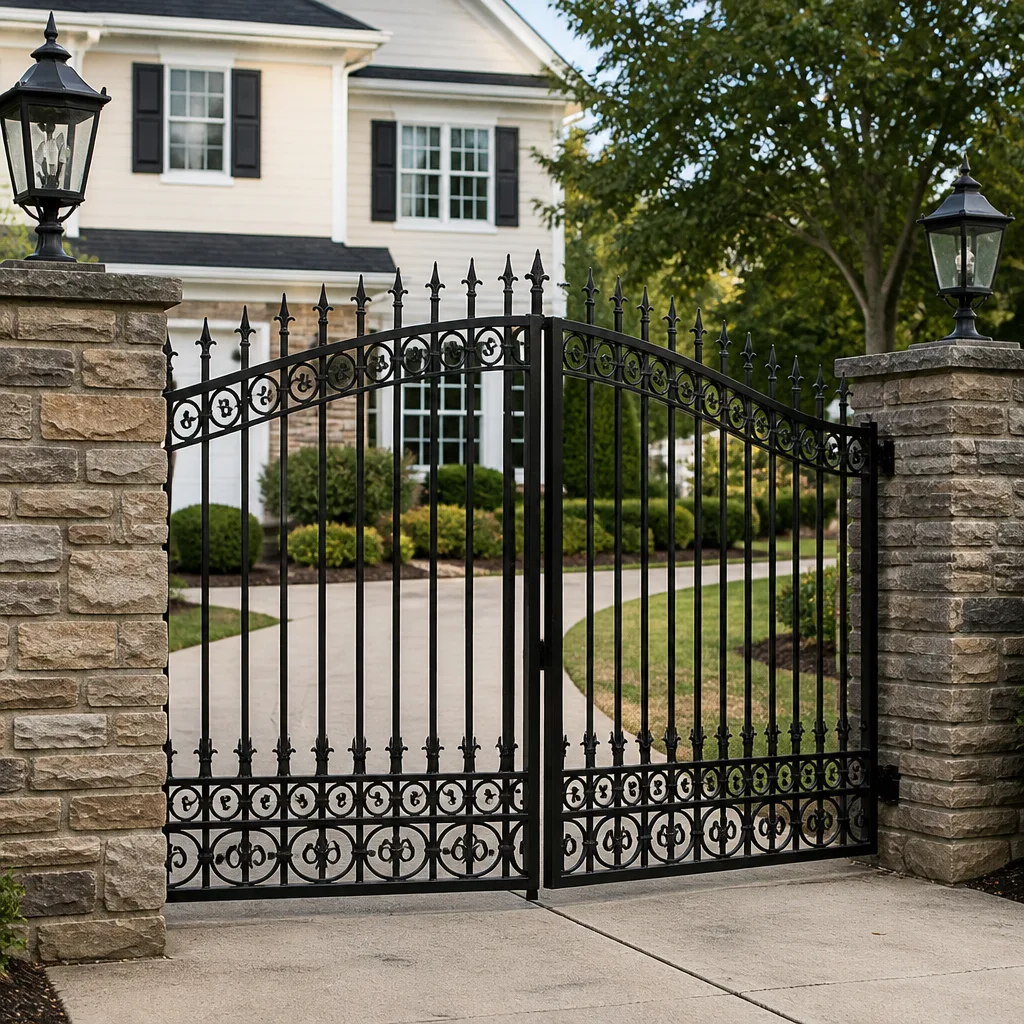 Wrought iron
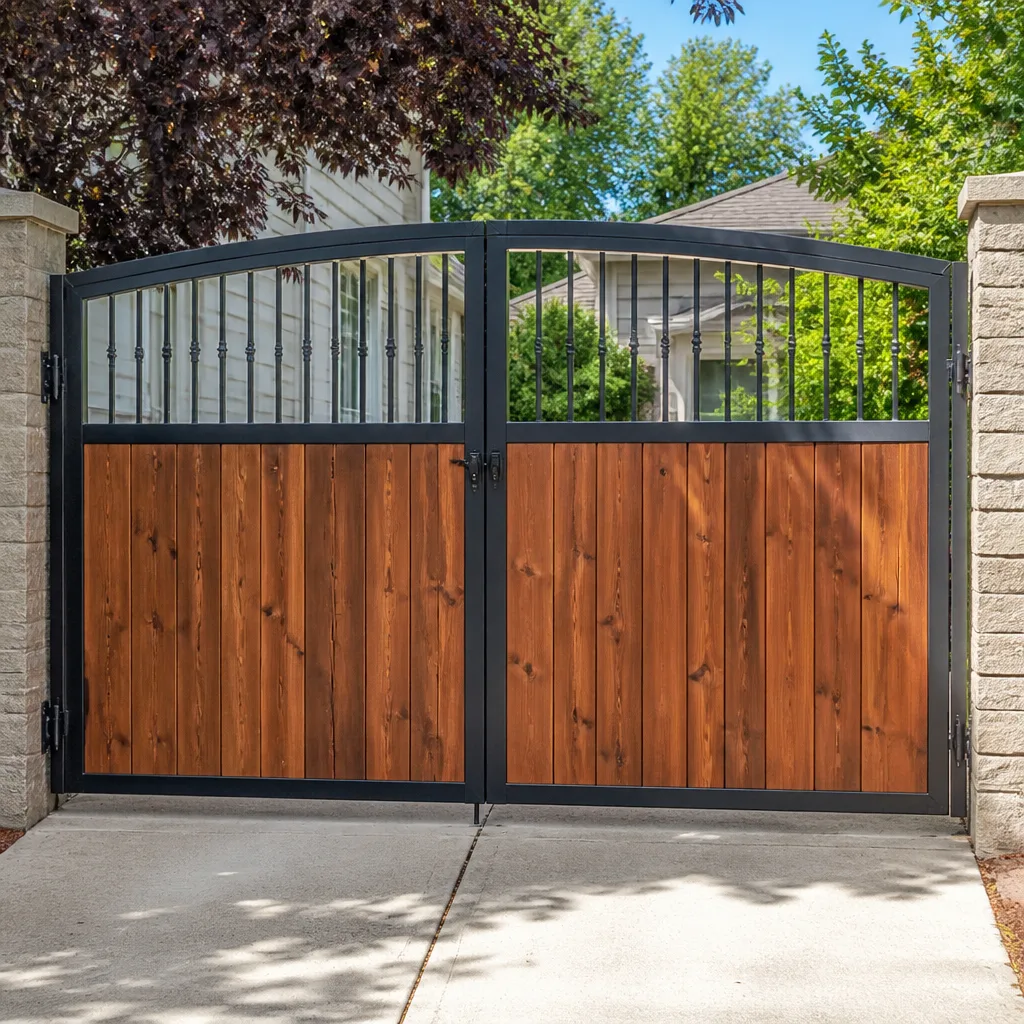 Wood & steel frame
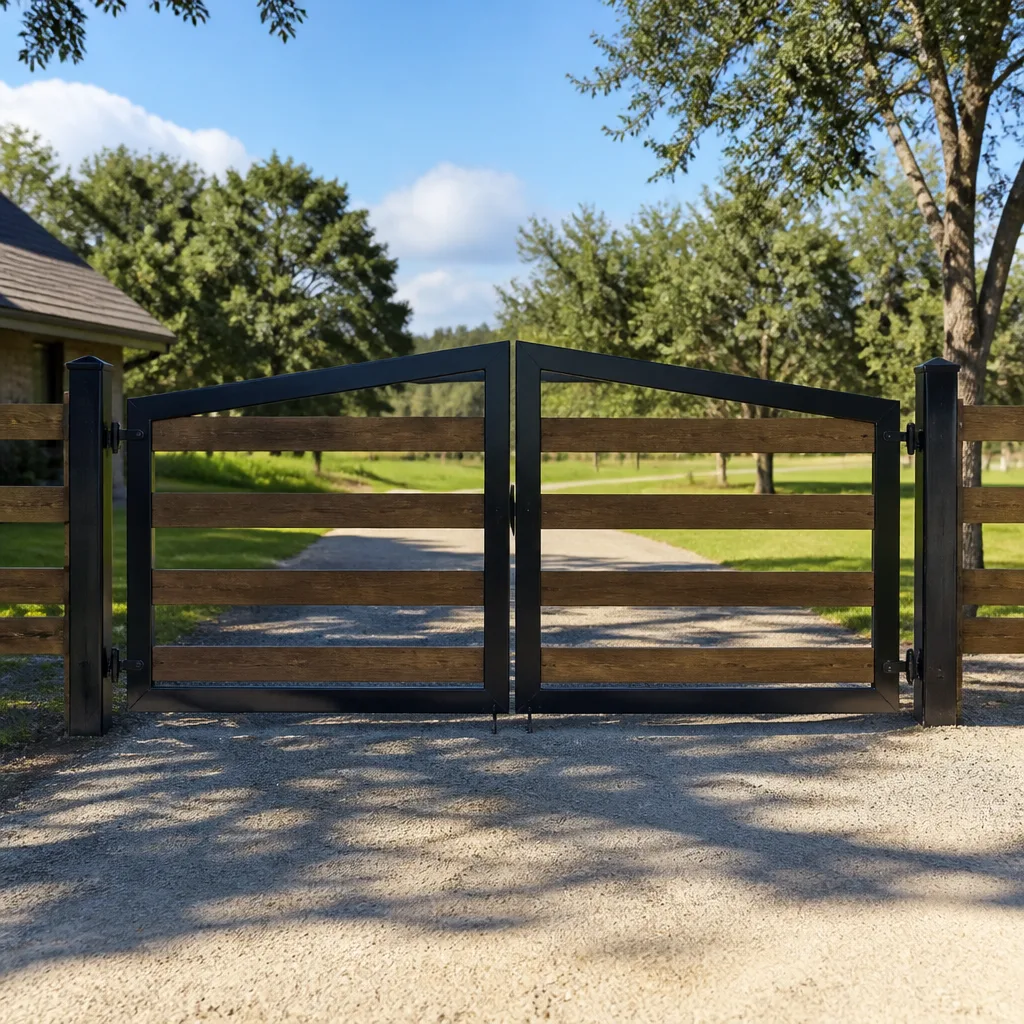 Farm & ranch
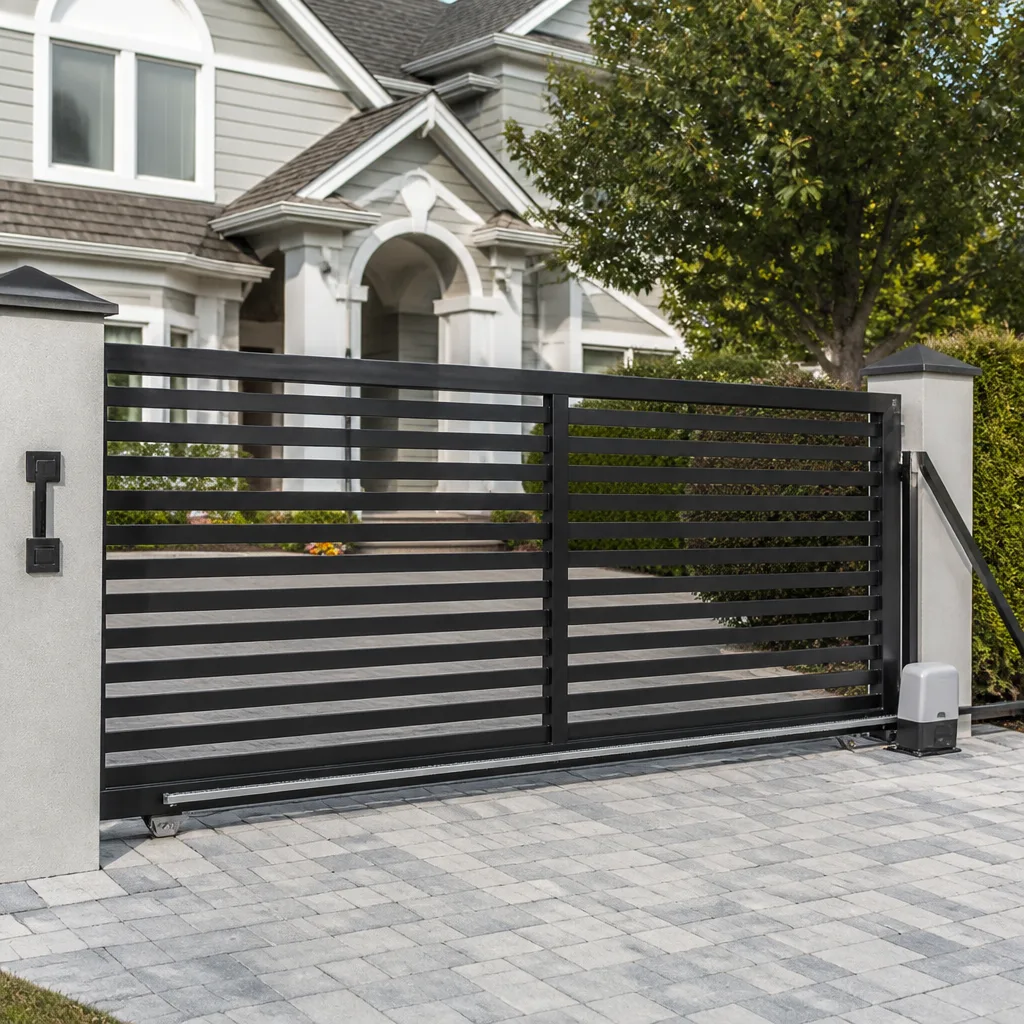 Sliding driveway gates
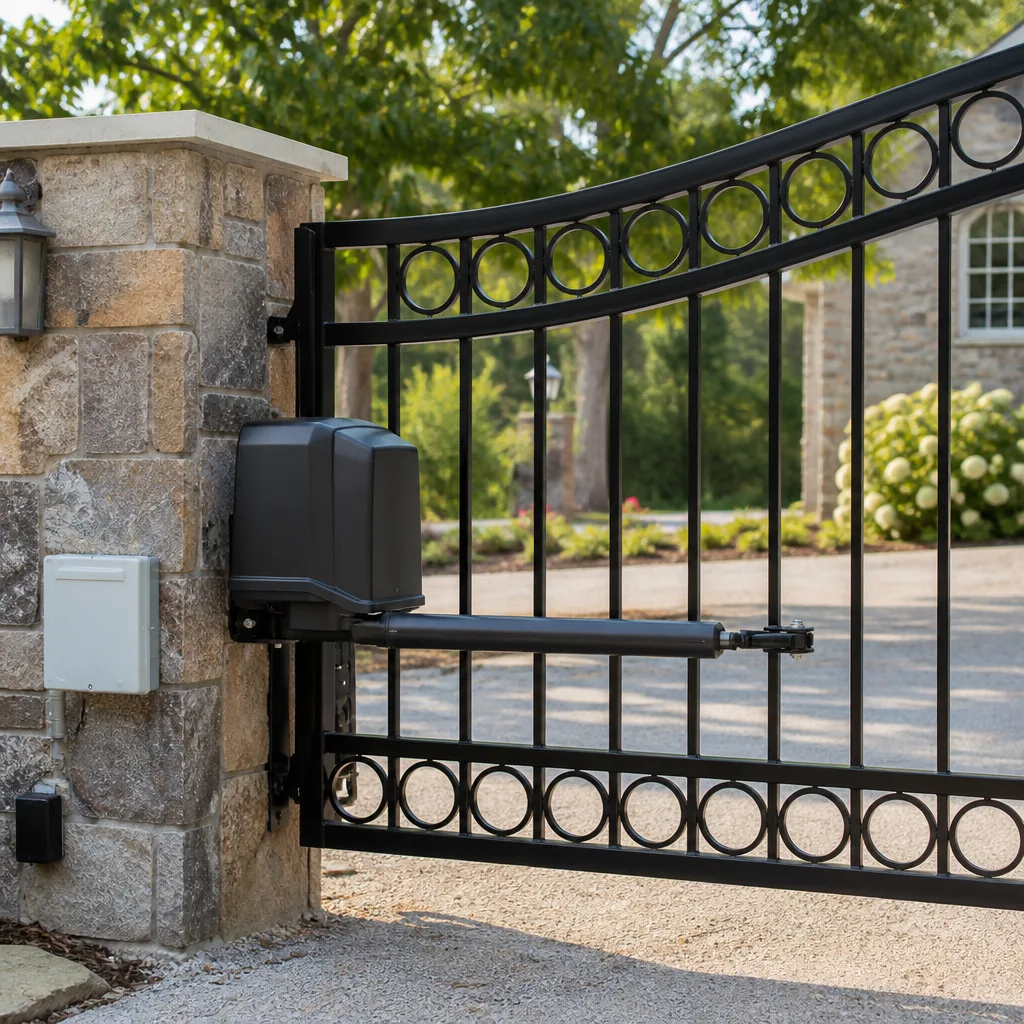 LiftMaster operators
Free on-site gate assessment - hinges, posts, and your LiftMaster or Nice gate operator checked before anything is quoted
The assessment is free and the quote is the invoice.
Get your free estimateGate Repair Troubleshooting in Yorba Linda: Common Problems and How to Fix Them
A gate that stops mid-swing and a gate that won’t start at all look like the same problem from the driveway, but they’re almost never caused by the same thing. One usually points to a mechanical bind, the other to an electrical fault or a dead operator. Treating them identically is how minor issues become expensive ones. This guide teaches Yorba Linda homeowners to read their gate’s symptoms the way a technician does, before anyone picks up a phone. You’ll learn the five failure categories, the specific signs that separate them, what you can safely check yourself, and exactly when to bring in a specialist. If your gate serves a driveway in Yorba Linda, the soil conditions and summer temperatures here shape how these systems fail, and we’ll cover that too.
Styles & brands we work with
- Wrought iron
- Wood & steel frame
- Farm & ranch
- Sliding driveway gates
- LiftMaster operators
Quick Answer
Most gate failures in Yorba Linda fall into one of five categories: electrical (power or control board), mechanical (hinges, track, rollers), operator-related (motor or limit switches), access control (keypad, remote, loop detector), or structural (post shift from clay soil movement). Start by checking whether the gate has power, listen for any sound when you trigger it, and note any error codes or blinking lights on the operator. Many issues, like thermal cutout from summer heat, resolve on their own; others need a technician with brand-specific knowledge. For a fast diagnosis, call (855) 382-4716. We answer 24/7. Fast dispatch from 7am to 7pm, Sunday through Friday.
Table of Contents
- Symptom-to-Category Mapping: The Five Failure Types
- Electrical Failures: Power, Boards, and Wiring
- Mechanical Failures: Hinges, Tracks, and Rollers
- Operator Failures: Motors, Limit Switches, and Thermal Trips
- Access Control Failures: Keypads, Remotes, and Loop Detectors
- Structural Failures: Post Shift and Clay Soil in Yorba Linda
- Reading Error Codes and Indicator Lights on Common Operators
- Safe DIY Checks vs. When to Stop
- How to Document the Failure So a Technician Can Diagnose Faster
- Common Mistakes to Avoid
- When to Call a Professional
- Frequently Asked Questions
- The Bottom Line
Symptom-to-Category Mapping: The Five Failure Types
Every gate problem we see in Yorba Linda fits into one of five categories. Knowing which category you’re in before you call a technician cuts diagnosis time in half, because each category has its own telltale signs and its own fix. Here is how to read the symptoms.
Category 1: Electrical Failures
Signs include a completely dead gate, no lights on the operator, a display that is blank, or a gate that works intermittently. The problem could be a tripped breaker, a GFCI that has cut power, a failed transformer, or a fried control board. Electrical faults often look worse than they are. Many times the operator is fine and the outlet it’s plugged into has simply tripped.
Category 2: Mechanical Failures
A gate that grinds, scrapes, sags, or binds halfway through its travel usually has a mechanical problem. Worn hinges, a misaligned track, a bent roller, or debris in the track are common culprits. These problems rarely fix themselves, and running a gate with a mechanical bind puts extra strain on the operator motor, which can turn a cheap hinge repair into a full motor replacement.
Category 3: Operator-Related Failures
The operator is the brain that moves the gate. When it hums but the gate does not move, or the gate moves a few inches and stops, or it opens but will not close, the operator’s motor, limit switches, or internal logic may be failing. On hot days in Yorba Linda, where summer temperatures regularly pass 95°F, thermal cutout trips can mimic a dead motor. We’ll detail that below.
Category 4: Access Control Failures
The gate itself may be perfectly fine while the thing that tells it to open has failed. A keypad that will not accept the code, a remote that suddenly stopped working, or a loop detector that fails to recognize a vehicle are all access control faults. These can be maddening because the gate is fully functional, yet it will not move when you need it to.
Category 5: Structural Failures
If the gate post has shifted, the gate drags on the ground, or the gap between the gate and the post has changed, you are dealing with a structural issue. In Yorba Linda, expansive clay soils move with moisture changes. A gate that worked perfectly in October can bind in August based on how the soil under the post has behaved. Structural problems are the slowest to develop and the most disruptive when they finally show themselves.
For a complete evaluation of a gate that is showing any of these symptoms, we provide gate repair throughout Yorba Linda with brand-specific knowledge across LiftMaster, FAAC, BFT, Linear, Viking, Ghost Controls, DoorKing, Elite, and Mighty Mule.
Electrical Failures: Power, Boards, and Wiring
Before you assume the operator has died, check whether it has power at all. A surprising number of “dead gate” calls in Yorba Linda turn out to be a tripped GFCI outlet or a circuit breaker that has popped. Start with the simplest possibility: is the operator plugged in, and is that outlet live? Plug a lamp or phone charger into the same outlet to test it. If the outlet is dead, check the breaker panel and any GFCI reset buttons on exterior outlets. These outlets are often on a shared circuit with other exterior loads, and a fault anywhere on that circuit can cut power to the gate. Reset the breaker or GFCI once and test the gate. If it trips again immediately, stop resetting it. A repeated trip means a genuine electrical fault in the wiring or the operator itself, and continuing to reset the breaker can damage the control board.
If the operator has power but the display is blank or scrambled, the control board may be failing. Control boards handle the logic that tells the motor to start, stop, and reverse. A board that has suffered a power surge, insect damage, or moisture intrusion can behave erratically or not at all. Ants are a particular problem in Yorba Linda yards. They are drawn to the warmth and vibration of gate operators and will build nests inside the housing, shorting out boards and relays. If you see accumulated debris or insect activity inside the operator housing, that’s worth mentioning when you call.
Signs of a control board fault include a gate that starts and then reverses for no reason, a keypad that will not respond even with a fresh code, or a motor that runs but the gate does not move. Board-level diagnosis usually requires a multimeter and brand-specific knowledge. Electric gate repair on control boards, sensors, and wiring is standard work for us, not an exception we make.
Quick checks for electrical faults
- Test the outlet with a known-working device
- Check the breaker and GFCI, reset once only
- Look for a blank or scrambled display on the operator
- Inspect the operator housing for ant nests, spider webs, or moisture
- Note whether the gate works when you use the manual release
If the gate works manually but not electrically, the mechanical side is healthy and the fault is in the electrical or operator side. That single data point narrows the problem considerably before a technician ever arrives.
Mechanical Failures: Hinges, Tracks, and Rollers
Mechanical failures announce themselves with sound. A gate that scrapes, squeals, grinds, or clunks during travel is telling you something is worn or misaligned. The most common mechanical failures on swing gates are worn hinge bearings, bent hinge posts, and sagging gate leaves. On slide gates, the usual suspects are debris in the track, worn rollers, and a bent or misaligned track section.
Hinges on a heavy residential gate carry enormous load, especially on a long driveway gate that may weigh several hundred pounds. Over time, the hinge pins wear and the gate begins to sag. The first sign is often a gate that drags slightly at the latch end or a gap at the top of the gate that is wider than the gap at the bottom. A sagging gate puts an uneven load on the operator, forcing the motor to work harder to move the gate through its travel. That extra strain shortens motor life and increases the chance of a thermal trip on hot days.
Slide gate rollers are another common wear point. When rollers wear flat or seize, the gate moves in a jerky motion and may derail entirely. A slide gate that has come off its track is dangerous. These gates are heavy, and if they tip, they can crush whatever is in their path. If your slide gate has jumped its track or is leaning significantly to one side, do not try to horse it back into position yourself. The forces involved are serious, and the gate can shift without warning. This is a job for a trained professional.
The track on a slide gate also collects everything that blows through a Yorba Linda yard: leaves, gravel, eucalyptus bark, and construction dust. A track packed with debris can bind the rollers and make the gate stall mid-travel. Regular clearing is a simple homeowner task that prevents a lot of service calls. But track replacement and roller replacement under a heavy gate are not DIY jobs. The gate has to be supported and the alignment reset.
Operator Failures: Motors, Limit Switches, and Thermal Trips
When an operator hums but the gate does not move, or moves a few inches and reverses, the problem is usually in the operator itself. A humming motor that cannot turn the gate often means the capacitor has failed. Capacitors give the motor its starting boost. A weak or failed capacitor means the motor cannot generate enough torque to move the gate. This is a straightforward replacement on most brands, but it requires opening the operator and working with electrical components, so call a technician with experience on your specific brand.
Limit switches tell the operator where the gate’s open and closed positions are. When a limit switch fails or drifts out of adjustment, the gate may stop short, overrun its travel, or reverse at the wrong point. A gate that opens partway and stops, or closes halfway and then reopens, is often a limit switch problem rather than a motor problem. On many operators, these switches are adjustable, but the adjustment needs to be precise. A gate that overruns its open limit can slam into the stop and damage the gate frame.
Thermal cutout in Yorba Linda heat
Yorba Linda summers regularly push past 95°F, and the direct sun on a metal operator housing can make the inside far hotter. Most modern operators have a thermal protection circuit that shuts the motor off when it gets too hot. This is not a failure. It’s the operator protecting itself. What this looks like from the driveway is an operator that quits mid-cycle on a hot afternoon, sometimes with a flashing indicator light that wasn’t there before. After 20 to 30 minutes in the shade, the operator cools down and works normally again. Homeowners often call this “the motor burned up,” but in many cases the motor is fine. The real issue is that the gate is binding, the duty cycle is too high for the operator’s rating, or the operator is undersized for the gate. Repeated thermal trips do shorten the life of the motor, so if this is happening regularly, have the system evaluated. Upgrading to a heavier-duty operator, particularly for a long or solid-panel gate, may be the right long-term fix.
We work across the full spectrum, from entry-level residential brands like Mighty Mule and Ghost Controls to commercial-grade operators from FAAC, BFT, and DoorKing. That range matters when a gate is genuinely under-specified for its size and weight. The fix is not always another part. Sometimes it is a different class of operator.
Access Control Failures: Keypads, Remotes, and Loop Detectors
An access control failure is uniquely frustrating because the gate itself is healthy. The problem lives in the system that tells the gate to move. These failures break down into three common types.
Keypad failures happen when the keypad stops accepting a code, accepts some codes and not others, or works only when pressed in a certain sequence. Corrosion on the keypad contacts is a frequent cause in Yorba Linda, where coastal and inland weather patterns swing between damp mornings and very dry afternoons. Before assuming the keypad is dead, try the code slowly and deliberately. Many keypads will not register a code if two buttons are pressed too quickly. If that doesn’t work, the keypad may need cleaning, reprogramming, or replacement. Reprogramming is brand-specific. We carry parts and knowledge for Viking, Linear, and BFT systems, among others.
Remote failures usually mean dead batteries first. Replace the battery and test again. If the remote still does not work, the issue may be a lost signal, a damaged receiver board in the operator, or a remote that has simply failed. We can test the remote and the receiver separately, which saves you from buying a new remote when the receiver is actually the problem.
Loop detectors are the invisible workhorses of automatic gates. They are coils of wire buried in the driveway that sense the metal mass of a vehicle. When a car or truck stops over the loop, the detector tells the operator to hold the gate open or to open it. A loop that fails will not open the gate for an approaching vehicle, or will let the gate close on a vehicle sitting in the path. Loop failures are usually invisible at the surface. Diagnosing one requires a detector tester and, in some cases, tracing the loop wire. This is not a homeowner-level diagnostic.
For access control problems on any brand, our electric gate repair service covers keypads, remotes, loop detectors, and the operator boards they connect to.
Structural Failures: Post Shift and Clay Soil in Yorba Linda
The ground under Yorba Linda moves. The native soils here are heavy with clay, and clay expands when wet and contracts when dry. Over a yearly cycle of winter rain and summer drought, the soil swells and shrinks. A gate post set into that soil acts like a tooth in a shifting jaw. The post does not have to move much to cause problems. A quarter inch of post movement at ground level becomes a visible sag at the end of a 10-foot gate leaf, and a gate that sagged is a gate that binds, drags, and eventually refuses to move at all.
Signs of post shift include a gate that catches on the ground, a latch that no longer lines up with its receiver, a gap at the hinge side that has widened or narrowed, and a gate that sits visibly lower on one side. You may also see soil pulling away from the base of the post during dry spells, which is the clay shrinking and exposing the footing.
Structural fixes are not about adjusting the operator. They are about resetting or replacing the post and its footing. This is the most invasive category of gate repair, and it usually requires removing the gate leaf, digging out the old footing to proper depth, and setting the post in new concrete. It is not a weekend project. A post that is reset incorrectly will move again, and you will be back in the same position next season.
We look at the gate as a system. A gate that sags because of soil movement is not fixed by putting a bigger motor on the operator. That just hides the symptom and burns out the new motor. The post has to be right before the operator can do its job.
Reading Error Codes and Indicator Lights on Common Operators
Most modern gate operators communicate their problems through blinking lights and error codes, but the homeowner has to know what they are looking at. Here is what to check on three common brands we see in Yorba Linda.
LiftMaster
LiftMaster operators use the diagnostic LED on the control board to report faults. A solid red LED typically means the board has power and is operating normally. A flashing red LED, with a specific number of blinks between pauses, corresponds to a fault code. Two blinks often indicate a stuck button or a wiring issue on the control input. Three blinks can point to a force setting that has been exceeded. The operator’s manual has the full table of blink codes. Before you call, count the blinks. It takes 30 seconds and gives the technician a starting point.
Viking
Viking operators have an LCD display on many models that shows fault text directly, like “MAX RUN TIME” or “ENTRAPMENT SENSOR.” A max run time fault means the gate took too long to reach its limit switch, which usually means a mechanical bind or a loose chain. An entrapment sensor fault points to a photo eye or edge sensor that is blocked or misaligned. Write down the exact text. It shortens the phone call and the diagnostic time.
Mighty Mule
Mighty Mule, a common choice for lighter residential gates, uses a buzzer and alarm sequence. A specific number of beeps, like three beeps repeating, can indicate a specific fault such as a low battery, an obstruction, or a control board issue. The beep patterns vary by model. If you can record the sound on your phone, that recording is genuinely useful to the technician, because the beep pattern is a code.
One note: after any power outage, a LiftMaster or Mighty Mule operator may need the remote controls re-synced or the limits re-learned. Some models do this automatically, some do not. If your gate acted normally before a brownout and would not work after, mention the power event when you call. We carry parts and knowledge for LiftMaster, Viking, Mighty Mule, Ghost Controls, and the full range of brands we service.
Safe DIY Checks vs. When to Stop
There is a line between the checks a homeowner can safely do and the work that needs a trained professional. Here is the division, clearly.
Safe to check yourself
- Confirm the operator has power by testing the outlet with another device
- Reset a tripped GFCI or breaker once, and only once
- Clear visible debris, leaves, or gravel from a slide gate track
- Replace the batteries in a remote control
- Check that the photo eye lenses are clean and nothing is blocking their beam
- Note any error codes, blink patterns, or beep sequences before calling
- Test whether the gate moves manually using the release handle, if your system has one accessible
Stop and call a professional for
- Any work on or near the operator’s high-voltage transformer wiring. This wiring carries lethal voltage even when the gate is unplugged, because capacitors store charge. Never open the transformer housing.
- Spring tension work on a gate that uses a counterbalance spring or a tensioned chain. A spring under tension can release violently.
- A slide gate that has come off its track or is leaning. These gates are extremely heavy and can tip.
- Any repair that requires lifting or supporting the gate leaf itself. A moving or falling gate can crush a limb.
- Diagnosis of a loop detector or control board. These require specialized test equipment and brand-specific wiring knowledge.
When a gate is heavy and the parts are under load, the risk of doing the work yourself is not just a broken part. It is an injury. We would rather walk you through the safe checks on the phone than read about someone injured trying to manhandle a 400-pound gate back onto its track. Our team handles gate repair from diagnosis through completion, including the mechanical, electrical, and structural work that should never be attempted without training.
How to Document the Failure So a Technician Can Diagnose Faster
The fastest service call is the one where the technician already knows what they are walking into. You can deliver that by documenting the failure before you make the phone call. Here is the exact process we recommend to every Yorba Linda homeowner who calls us.
- Record a video of the gate attempting to operate. Use your phone. Film from a safe distance and include the gate’s entire travel path. Capture the sound. A video of the gate humming, grinding, or stalling is worth a hundred verbal descriptions.
- Photograph the operator housing and control board. Open the access cover only if it is safe and does not expose high-voltage wiring or tensioned components. A clear photo of the LED lights, display, or DIP switches helps us identify the model and the fault.
- Write down the exact error code or blink pattern. Count the blinks, note the pauses, and write down any text on the display. Include the brand and model number from the operator label.
- Note anything that changed recently. A recent power outage, nearby construction, new landscaping, a vehicle that hit the gate, heavy rain, or a change in how the gate behaves at different times of day. One detail like “it only fails after 2 p.m. on hot days” can be the clue that points to thermal cutout rather than a dead motor.
- Test the gate manually if the release is accessible. If the gate moves smoothly by hand, tell us. If it binds or feels heavy, tell us that too. The difference tells us whether we are dealing with mechanics or electronics.
Every one of these steps takes less than five minutes. Together they can turn a 90-minute diagnostic visit into a 30-minute repair, because our technician arrives with the right parts and a clear hypothesis instead of starting from zero. We carry parts and knowledge across nine brands, but a gate that arrives at our attention with good documentation is always faster to fix.
Common Mistakes to Avoid
- Resetting a tripped breaker repeatedly. If the breaker trips twice, there is a real fault. Continuing to reset it can damage the control board or start an electrical fire. Reset once and call.
- Assuming a hot-day shutdown means the motor is dead. Thermal cutout on a Yorba Linda afternoon often looks like motor failure. Let the operator cool and test it again. If it recurs regularly, the gate may be binding or the operator may be undersized.
- Lubricating everything in sight. Spray lubricant on a control board, photo eye, or belt is a fast way to ruin them. Lubrication belongs only on the specific points the manufacturer designates, and using the wrong product on a track or roller attracts more dirt and makes the bind worse.
- Forcing a sagging gate back into alignment. A gate that has dropped or a slide gate that has left its track will not be fixed by muscle. The weight involved can crush a hand or a foot. Support and release the load properly, or call a technician with the right equipment.
- Ignoring the first signs of a problem. A slight grind, a momentary hesitation, a small sag. These are early warnings. The faster they are addressed, the smaller and cheaper the fix. A $200 hinge repair caught early prevents a $1,500 operator replacement later.
- Buying a new remote without testing the receiver. Many “bad remotes” are actually a bad receiver board in the operator. A test separates the two and saves the cost of a remote that would not have fixed the problem.
- Attempting DIY work on tensioned components or high-voltage wiring. Gate springs, chains under tension, and operator transformers are not the same risk level as a loose bolt. These are the parts that injure people. Stop at the line and call a professional.
When to Call a Professional
You should call a specialist the moment the problem involves anything beyond the safe checks listed above. That includes a gate that trips a breaker repeatedly, a slide gate off its track, any sign of post movement or sagging, control board faults, loop detector failures, and any work near tensioned springs or high-voltage wiring. If the gate is your daily entry point, every day it is down is a day your routine is disrupted and your property is more exposed. Call (855) 382-4716. We answer 24/7. Fast dispatch from 7am to 7pm, Sunday through Friday. We provide free estimates in Yorba Linda, and the price is set per job by the written estimate before any work begins, so you know the number before we start.
Frequently Asked Questions
Every gate repair is priced individually because the scope varies so widely. A simple hinge or roller replacement is usually modest, while a control board or operator replacement will be several times that. The estimate is free, and the written estimate sets the final price before any work starts. Call (855) 382-4716 for an exact quote on your specific system.
Most operators have a thermal protection circuit that shuts the motor down when internal temperatures get too high. Yorba Linda summers regularly exceed 95°F, and a metal operator housing in direct sun can get much hotter inside. Let the operator cool for 20 to 30 minutes. If it works again, the shutdown was thermal cutout, not motor failure. If it recurs often, the gate may be binding or the operator may be undersized, and both have fixes.
Yes. Our technicians work across nine manufacturers: LiftMaster, FAAC, BFT, Linear, Viking, Ghost Controls, DoorKing, Elite, and Mighty Mule. We can identify an unlabeled operator and diagnose it by its board, motor, and behavior. Brand-specific knowledge means we diagnose by the logic of your specific system, not by guesswork.
Yes. We service both residential driveway gates and light-commercial access systems, including single and double swing gates, slide gates, and cantilever gates. The failure modes differ, and so do the fixes, but our technicians are fluent in both.
A slide gate that has left its track is unstable and can tip. Keep people, pets, and vehicles away from it until a technician secures it. Do not try to lift it back onto the track yourself. These gates are extremely heavy and can shift without warning. Call us and we will secure it and set it back properly.
Check whether the operator has power by testing the outlet with another device. Reset a tripped GFCI or breaker once. Check the photo eye lenses for dirt or blockage. Replace the remote battery. If none of those work, call (855) 382-4716 with the brand, model, and any error codes or blink patterns you can see. We answer 24/7. Fast dispatch from 7am to 7pm, Sunday through Friday.
The Bottom Line
Most gate failures in Yorba Linda fit into five categories: electrical, mechanical, operator-related, access control, and structural. Identifying the category before you call cuts diagnosis time dramatically and helps you avoid the expensive mistake of treating one problem as another. Check for power, note the error codes, document the failure with video, and respect the line between safe checks and dangerous work. The clay soil and summer heat here create specific failure patterns a local technician understands, which is why a gate specialist in Yorba Linda is the right call when the system is down. Call (855) 382-4716 for a free estimate and a written price before any work starts.
Written by the team at Gate Repair Yorba Linda, serving Yorba Linda since 2011.
See the difference
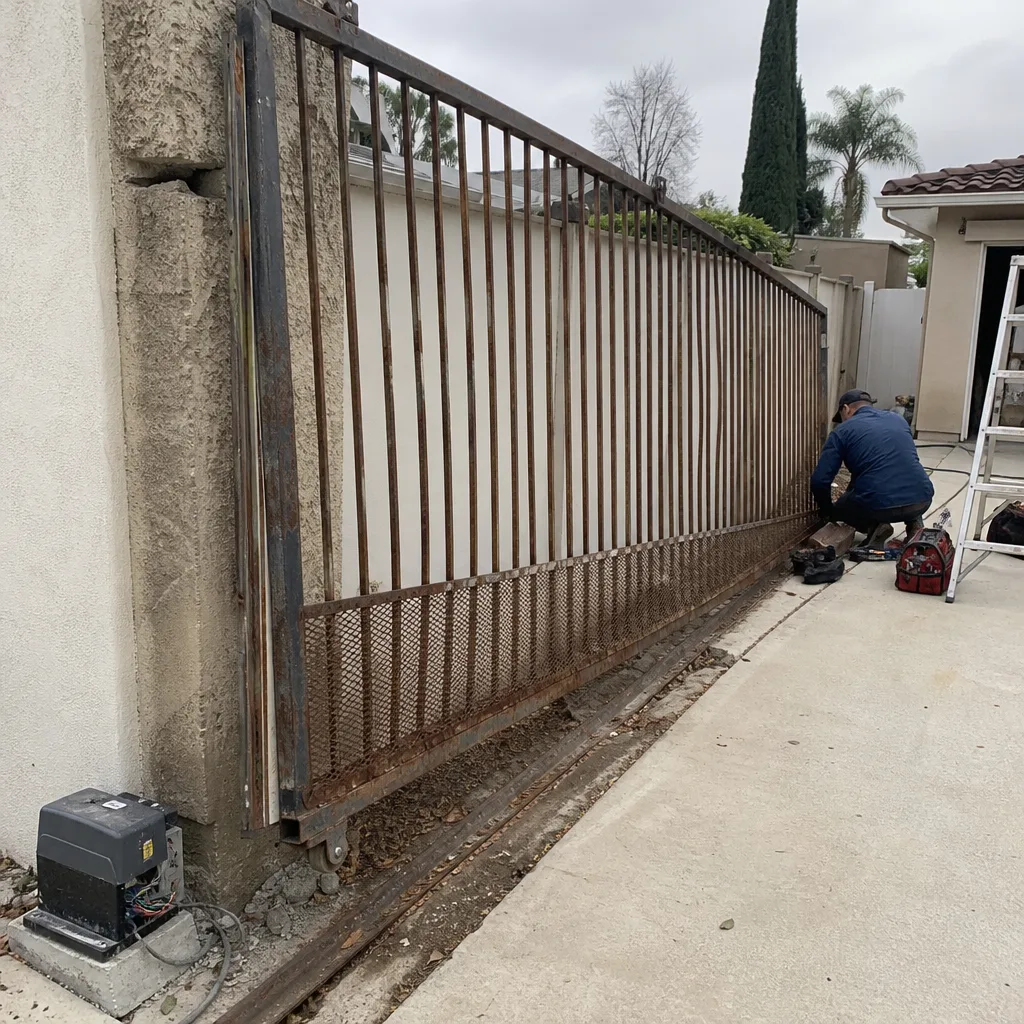 Before
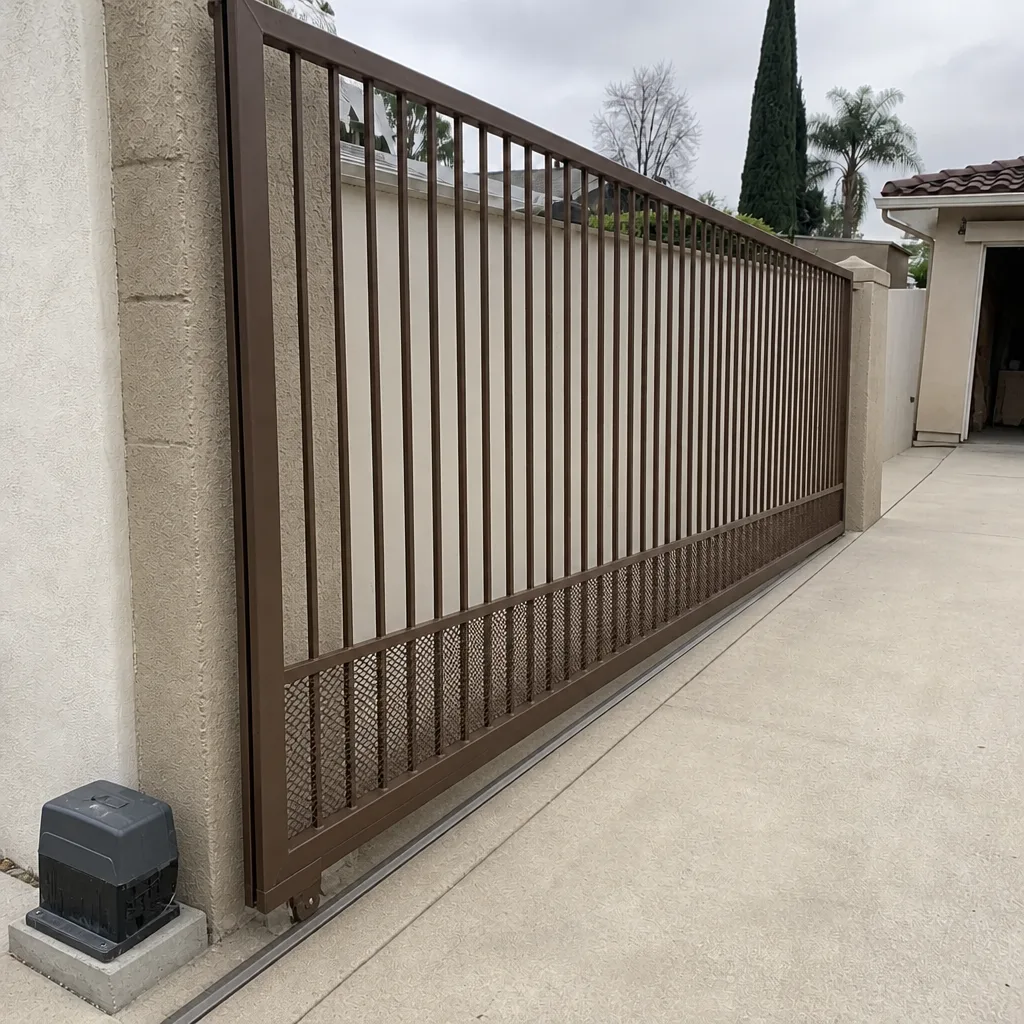 After
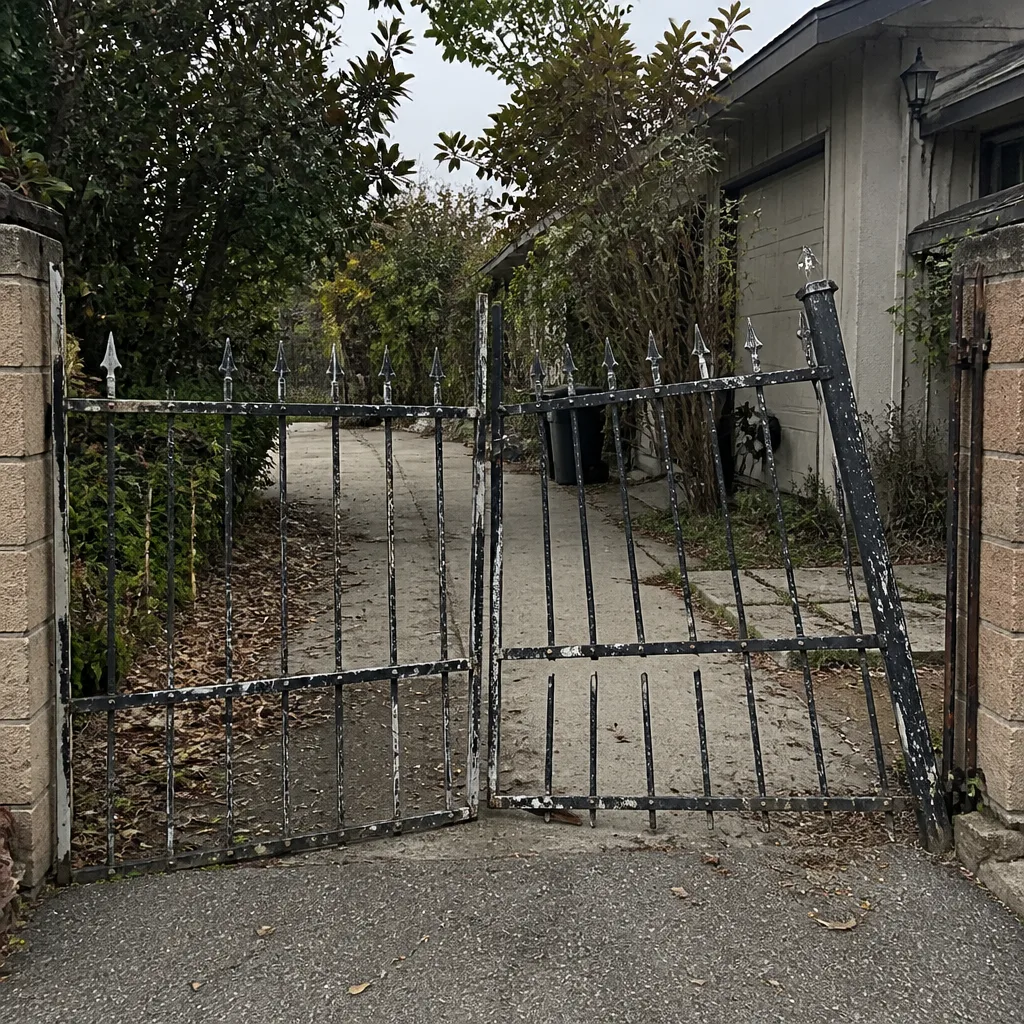 Before
 After
 Before
 After