
Last updated November 4, 2026
 Wrought iron
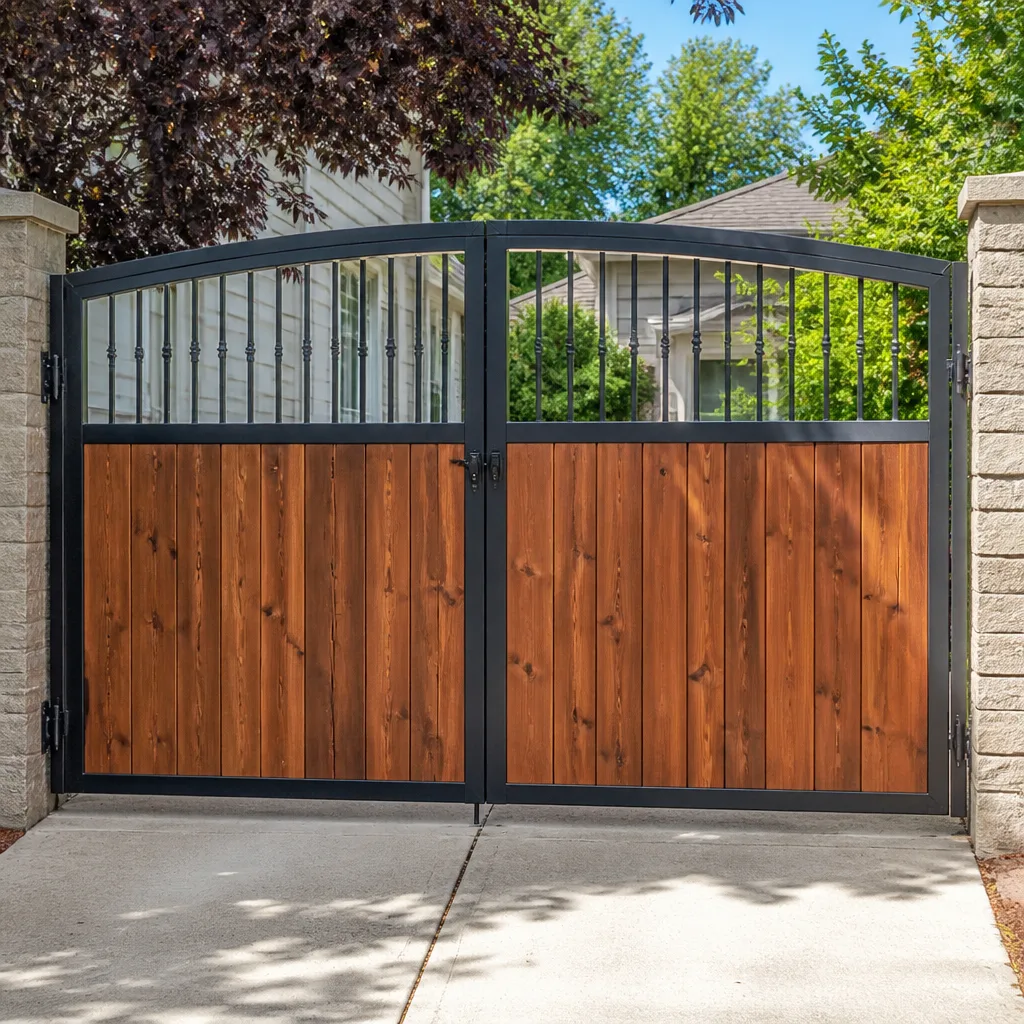 Wood & steel frame
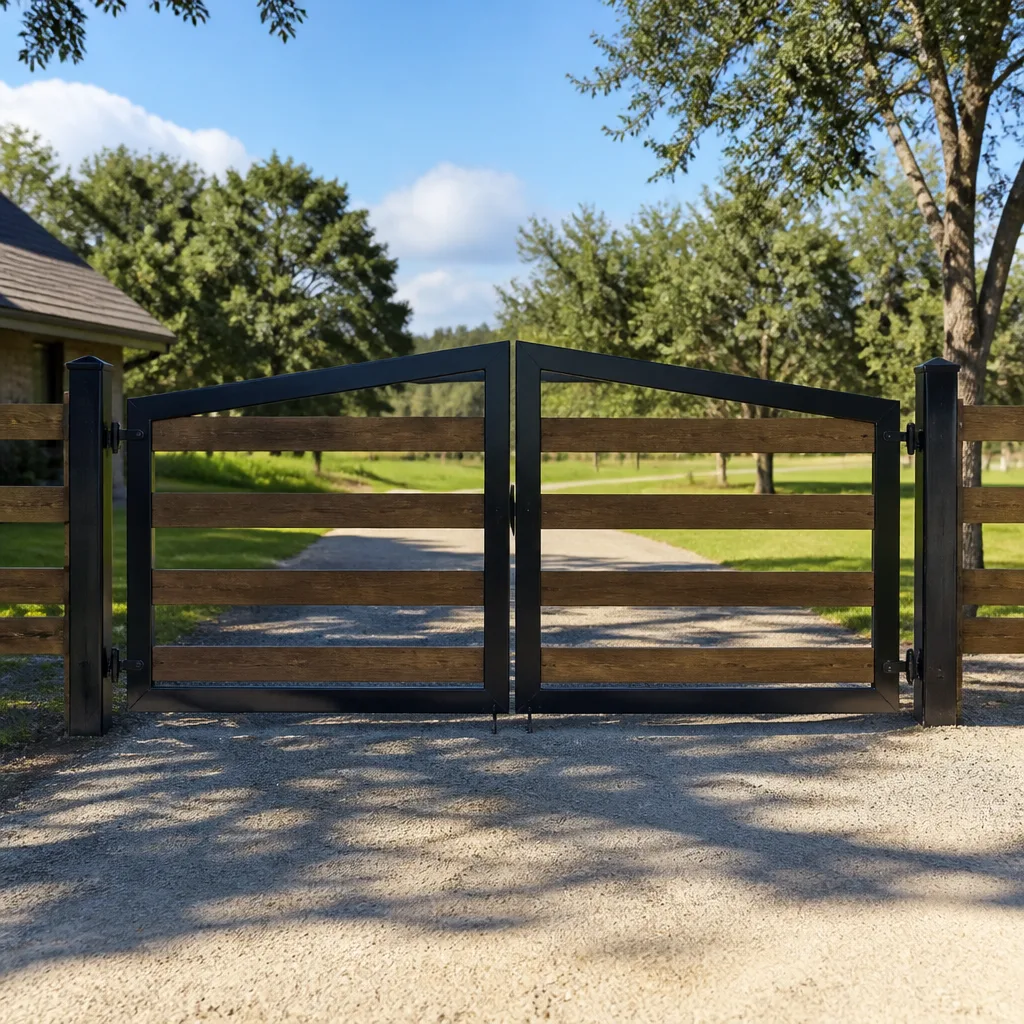 Farm & ranch
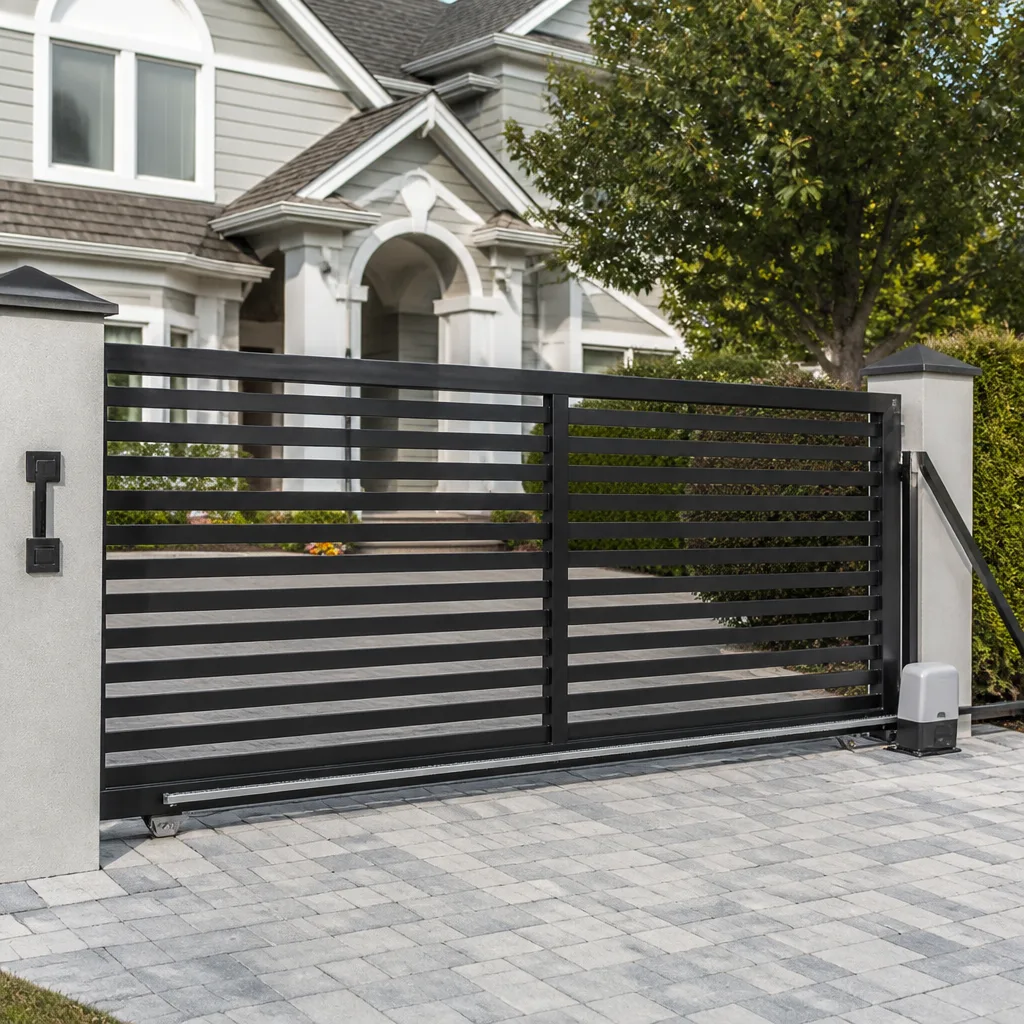 Sliding driveway gates
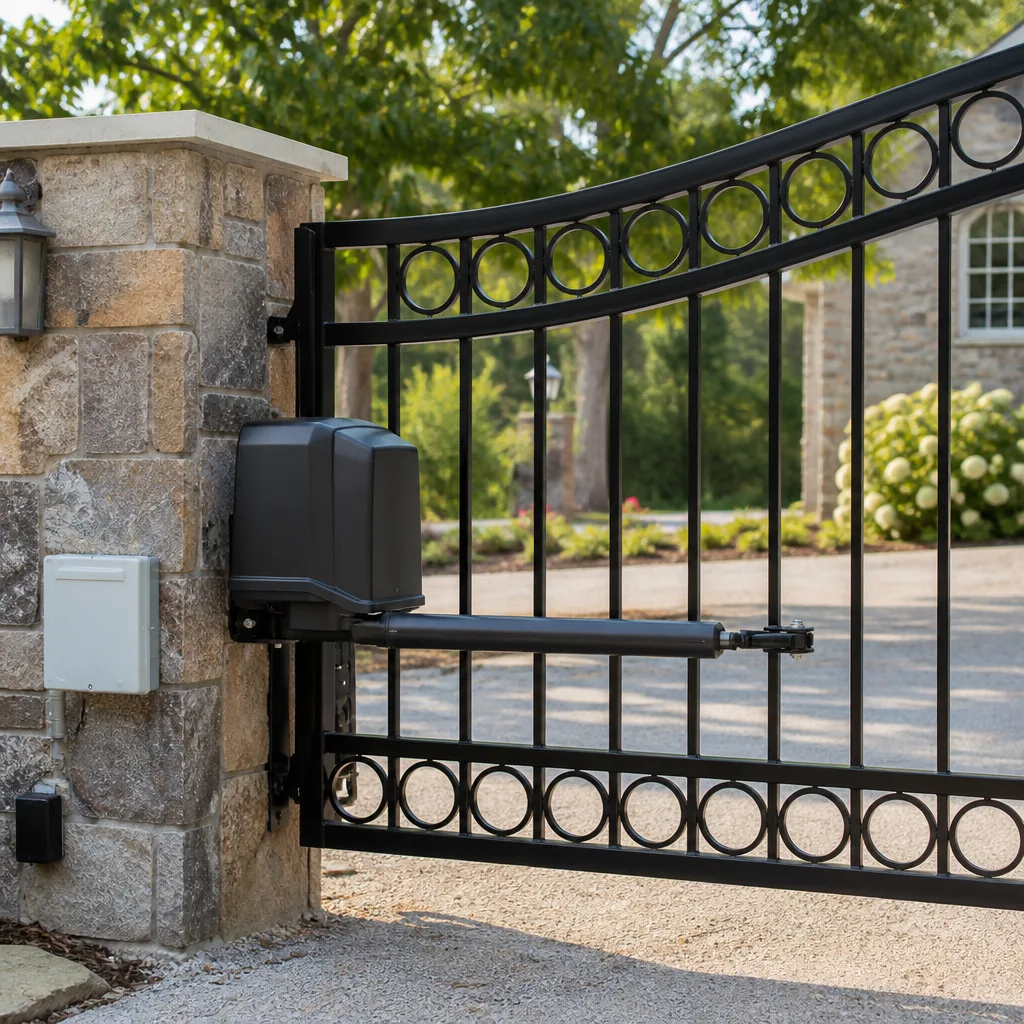 LiftMaster operators
Free on-site gate assessment - hinges, posts, and your LiftMaster or Nice gate operator checked before anything is quoted
The assessment is free and the quote is the invoice.
Get your free estimateGate Repair Maintenance Checklist for Yorba Linda Homeowners
Most gate maintenance advice repeats the same generic line about lubricating the hinges and goes on its way. But lubrication is the most over-cited and most incorrectly performed maintenance task on residential gates in Yorba Linda. The wrong lubricant on a chain drive operator does more damage than no lubricant at all, and many homeowners discover this only after the chain has accumulated a gritty paste that accelerates sprocket wear. This guide is built around what actually degrades gates in our inland Southern California climate: ultraviolet exposure, dry heat, and the shrink-swell behavior of clay-heavy soil. You’ll learn the monthly, quarterly, and annual tasks that keep a gate operating safely, the specific lubricants that belong on each component, and how to verify your automatic gate’s safety reversal without guessing.
Quick Answer
A gate maintenance checklist for Yorba Linda homeowners should include monthly visual inspections for wiring damage and hinge wear, quarterly lubrication with component-specific products, and annual safety reversal testing plus post lean checks. The failure drivers here are UV-exposed insulation, dry heat stress on circuit boards, and soil movement that tilts posts out of alignment.
Styles & brands we work with
- Wrought iron
- Wood & steel frame
- Farm & ranch
- Sliding driveway gates
- LiftMaster operators
Table of Contents
- Why Yorba Linda’s Climate Demands a Different Checklist
- The Right Lubricant for Every Gate Component
- Monthly Maintenance Tasks
- Quarterly Maintenance Tasks
- Annual Maintenance Tasks
- Checking for Post Lean in Clay-Heavy Soil
- The UV Inspection Routine for Wiring
- How to Test Automatic Gate Safety Reversal
Why Yorba Linda’s Climate Demands a Different Checklist
A maintenance checklist written for a coastal city or a place with freezing winters will lead you wrong in Yorba Linda. We don’t deal with salt air, and we don’t deal with frost heave. What we do deal with is relentless sun exposure, summer temperatures that regularly climb past 90 degrees, and soil that shrinks during long dry spells and swells when the occasional Santa Ana season rain arrives. Each of these factors attacks a gate differently.
UV radiation is the quiet killer of gate wiring and plastic components. Any wiring that isn’t fully shielded inside a conduit or behind a protective cover will gradually lose its insulation flexibility. The outer jacket turns chalky, then develops hairline cracks. Once a crack opens, moisture from morning dew or an irrigation overspray can find its way to the conductor and cause an intermittent operator fault that is maddening to diagnose. In our experience working on electric gate repair across Yorba Linda, UV-degraded wiring is one of the most common causes of a gate that works sometimes and fails other times.
Dry heat stresses operator electronics. A control board mounted inside a metal housing on a west-facing gate can see internal temperatures well above the ambient air temperature on a summer afternoon. Components age faster in that heat. The lesson is simple: a maintenance checklist for Yorba Linda must include a check of the operator housing’s internal condition, not just the gate’s moving parts.
Soil movement is the third factor. Yorba Linda sits on clay-heavy soils in many neighborhoods, and clay expands when wet and contracts when dry. A gate post set in that soil can develop a slow lean over several years, even with a proper concrete footing. The lean may be barely visible at first, but it changes the alignment of the gate and forces the hinges or track to carry loads they weren’t designed for. Checking for post lean is a maintenance task that belongs on every annual list here.
The Right Lubricant for Every Gate Component
The single most common mistake we see on gate repair calls in Yorba Linda is the wrong lubricant applied to a chain drive operator. Let’s be specific about what belongs where, because the answer is not one product.
Chain Drive Operators
Chain drive operators are common on slide gates and on some swing gate arm operators. The chain needs a dry-film lubricant or a purpose-made chain lube that penetrates the pins and rollers, not a heavy grease. Heavy grease acts like a magnet for dust and grit, and in Yorba Linda’s dry conditions that grit becomes a grinding paste. A chain that gets greased regularly will actually wear faster than a chain that receives a proper dry lube twice a year. We work on LiftMaster and DoorKing chain drive operators regularly, and the chain condition is always a direct reflection of what the owner has been spraying on it.
Screw Drive Operators
Screw drive operators are found on some Elite and LiftMaster gate openers. These use a threaded steel rod that drives a traveler. The correct lubricant is a white lithium grease applied lightly to the screw threads. Less is more here. A heavy application collects dust and creates resistance. Wipe the screw clean first, then apply a thin, even coat.
Hinges and Pivot Points
Hinges on a swing gate benefit from a general-purpose lithium grease or a silicone-based lubricant. The goal is to reduce friction without creating a sticky residue. If a hinge has grease fittings, use a grease gun with lithium grease and give each fitting one or two pumps. If it doesn’t, a light spray of silicone lubricant on the hinge pin is sufficient. Avoid WD-40 as a long-term lubricant. It is a solvent and water displacer that cleans well but leaves almost no lasting lubrication behind.
Slide Gate Rollers and Track
Slide gate rollers need a silicone or lithium lubricant on the roller bearings. The track itself should stay dry and clean. Never grease a slide gate track. Grease on the track picks up every bit of grit and turns into a grinding surface that wears the rollers flat. If the track looks shiny and polished, that’s normal. If it’s packed with greasy dirt, clean it out with a wire brush and degreaser, then keep it dry.
Monthly Maintenance Tasks
Monthly tasks are the fast visual checks that catch problems before they become breakdowns. Each one takes a minute or two, and all of them together shouldn’t take more than fifteen minutes on a typical single gate.
- Listen during a full open-close cycle. Stand near the gate and run it through one complete cycle. A healthy gate makes a consistent, even sound. A new grinding, clicking, or straining sound tells you something has changed. Note where in the cycle the sound occurs: that points to the hinge, the track, or the operator.
- Watch the gate’s speed. A gate that moves noticeably slower than it did a month ago is working harder. That can indicate a failing capacitor in the operator, increasing friction in the track or hinges, or a low-voltage condition at the power supply.
- Check the safety edges and photocells. Photocells should be clean and aligned. Wipe the lenses with a dry cloth. Safety edges, if present, should be intact with no tears or flattening.
- Clear debris from the track. Leaves, twigs, and dirt accumulate in slide gate tracks faster than most people expect. Even a small stone can cause the gate to bind or trip the operator’s obstruction sensor.
- Inspect visible wiring. Look at any wiring that runs along the gate or post. You’re checking for signs of chafing, cracking, or exposed conductor. If the outer jacket looks brittle, make a note to address it rather than pulling on it.
These monthly checks are the foundation of good gate ownership. They don’t require tools or specialized knowledge, just attention. And they are exactly the kind of thing that separates a gate that lasts fifteen years from one that needs a major repair at year five.
Quarterly Maintenance Tasks
Quarterly tasks go a step further. They include lubrication, which as we covered above is component-specific, plus a few checks that benefit from a closer look.
- Lubricate chain drive or screw drive operators. Use a dry-film chain lube on chains, white lithium on screw drives. Apply sparingly. More is not better.
- Lubricate hinges and pivot points. Light lithium or silicone spray on hinge pins. One or two pumps on grease fittings if equipped.
- Check all bolts and fasteners for tightness. Vibration from daily operation loosens bolts slowly. Pay particular attention to the bolts holding the operator to its mounting plate and the bolts holding hinges to the post and gate panel.
- Test the manual release mechanism. Every automatic gate operator has a manual release that allows the gate to be moved by hand if power fails. Exercise it once a quarter so it doesn’t seize. A release that hasn’t been touched in three years often won’t work when you actually need it.
- Inspect the gate panel itself. Look at welds on steel gates for stress cracks, especially where the gate frame meets the hinge plates. On wooden gates, check for soft spots, especially at the bottom rail where sprinkler overspray keeps wood damp.
Annual Maintenance Tasks
The annual checklist is the deep maintenance pass. It’s also the point where many homeowners in Yorba Linda decide whether to call in a professional or handle it themselves. Both are reasonable, but there are a few annual tasks that benefit from training.
- Test the automatic safety reversal. We cover this in detail below, but the short version is that this must be tested with a solid object, not your body. The procedure is different for swing gates and slide gates, and the gate should reverse promptly on contact.
- Check post lean. Use a level or plumb line against each gate post. A small amount of lean is tolerable. More than about one degree of visible tilt means the gate’s weight distribution is shifting and the hinges or track are compensating.
- Inspect all wiring connections at the operator. Turn off power at the breaker, open the operator cover, and look for loose terminal screws, signs of overheating, or corrosion. If you’re not comfortable working around 120-volt or 240-volot circuits, this is a task to hand to a professional. The line voltage side of a gate operator can cause serious injury.
- Clean the inside of the operator housing. Dust, spider webs, and debris accumulate inside operator housings. A clean operator runs cooler, and cooler electronics last longer in our hot summers.
- Check battery backup if equipped. Some operators, especially on Mighty Mule and Ghost Controls residential systems, use battery backup. Test the battery by disconnecting AC power and cycling the gate once. If the gate barely moves on battery, the battery is due for replacement.
Checking for Post Lean in Clay-Heavy Soil
Yorba Linda’s soil composition varies by neighborhood, but significant portions of the city sit on clay-heavy soils that are prone to shrink-swell behavior. During a dry summer, clay soil contracts and can pull slightly away from a concrete footing. When winter rains arrive, the soil expands and pushes back. Over several cycles, a four-by-four steel post or even a larger tube steel post can develop a measurable lean.
The check itself is simple. Place a four-foot level vertically against the gate post on two adjacent faces. The bubble should center. If it doesn’t, note the direction and rough magnitude of the lean. A small lean, under about half a degree, is usually tolerable and won’t materially affect gate operation. A lean past one degree starts to matter because the gate’s weight is no longer hanging straight through the hinges. The gate will tend to drift or bind, and the operator will work harder on every cycle.
If you see a significant lean, don’t try to push the post back with a vehicle or a come-along. The footing may be cracked or the post may have corroded below grade. Moving it aggressively can snap the post or worsen the footing damage. This is a situation where a Gate Repair Yorba Linda technician can measure the lean, assess the footing, and recommend whether the fix is a new footing or a post replacement. Post lean left unchecked is a common cause of sudden hinge failure, and hinge failure on a heavy gate is dangerous.
For homeowners who notice that their gate scrapes the ground in dry months but clears it in wet months, soil movement is the likely explanation. The gate isn’t sagging; the ground and post are shifting. It’s a regional condition that we see regularly in Yorba Linda.
The UV Inspection Routine for Wiring
Ultraviolet light degrades plastic insulation faster than almost anything else in this climate. Wiring that runs along a gate, a post, or an operator arm gets full sun exposure for hours every day. The degradation is gradual, and it’s easy to miss until the gate starts behaving erratically.
Here’s how to inspect your gate’s wiring for UV damage without pulling on anything that might be fragile. Start by looking, not touching. Walk along the gate and examine every visible inch of wiring. Healthy insulation has a consistent color and a slight sheen. UV-damaged insulation looks chalky, faded, or has a flat, dusty appearance. In advanced stages, you’ll see fine cracks running lengthwise or crosswise along the wire jacket. On older installations, you may see flaking or a white residue on black insulation.
If you find wiring that looks suspect, the correct response is to address it before the gate fails. A wire with cracked insulation may still function fine for now, but the failure is coming. The problem is that a cracked jacket allows moisture in, and once moisture reaches the conductor, you get corrosion and intermittent shorts. The operator’s control board may see a phantom signal and refuse to open or close, or the safety circuit may trip randomly. Those intermittent faults are among the most frustrating service calls in Yorba Linda, and they’re almost always traceable to a wiring or connection issue rather than a control board defect.
Replacing a short run of low-voltage wiring is within the scope of a careful DIYer. Replacing line-voltage wiring or troubleshooting a fault on a board is not. Line voltage wiring carries enough current to cause serious injury, and testing a control board requires knowing which terminals to probe and what voltages to expect. We work on LiftMaster, DoorKing, Elite, and Mighty Mule systems regularly, and the diagnostic logic differs from brand to brand. If you’re uncertain about what you’re looking at, call (855) 382-4716. We answer 24/7. Fast dispatch from 7am to 7pm, Sunday through Friday.
How to Test Automatic Gate Safety Reversal
Automatic gate operators installed in the United States must meet UL 325 safety standards, which include a requirement for an automatic reversal mechanism. The gate must detect an obstruction and reverse direction rather than continue pushing against it. This is not a feature you can assume is working. Components fail, sensitivity settings drift, and a gate that reverses today may not reverse next month.
The test procedure is straightforward, but it must be done correctly. Here’s how to verify your gate’s auto-reverse without putting yourself in harm’s way.
- Get a solid test object. A traffic cone, a plastic bucket weighted with sand, or a similar object that won’t damage the gate or be damaged by it. Never use your body, your hand, or a child to test safety reversal.
- For a swing gate: Place the test object in the gate’s path near the leading edge, about mid-height on the gate panel. Start the gate closing. The gate should contact the object, sense the resistance, and reverse direction immediately.
- For a slide gate: Place the test object in the track path, near the leading edge. Start the gate closing. The gate should contact the object and reverse, or if equipped with photoelectric sensors, the beam should detect the object before contact and stop the gate.
- Observe the reversal behavior. The gate should reverse promptly and travel back to the fully open position or at least several inches away from the object. A gate that hesitates, grinds, or pushes against the object for more than a second before reversing has a problem.
- Repeat the test on both edges. Test the reversal near the fully open position and near the fully closed position. Sensitivity can vary across the travel range.
If your gate fails this test, stop using it in automatic mode until it’s been corrected. Run the gate manually if needed, but keep people and vehicles clear. A gate that doesn’t reverse can exert hundreds of pounds of force at the leading edge, and a slide gate that comes off its track can tip over. This is not a maintenance item to deprioritize. The safety mechanisms exist for a reason, and verifying them annually is the single most important task on this checklist. For help with a failed safety reversal test, call (855) 382-4716 for a free estimate. We work on electric gate operators across the major brands.
Common Mistakes to Avoid
- Greasing a slide gate track. Every greased track we see in Yorba Linda is packed with dirt and grit. The grease attracts abrasive particles that wear rollers flat and cause the gate to grind along the track. Keep the track dry and clean.
- Using WD-40 as a lubricant. WD-40 is a water displacer and solvent. It cleans chains and hinges well but leaves almost no lasting lubrication. A week after spraying, the component is running dry again.
- Ignoring a slow gate. A gate that gradually slows down over several weeks is telling you something. It might be a failing capacitor, a worn gear, or a binding hinge. Waiting until the gate stops entirely usually turns a small repair into a replacement.
- Testing safety reversal with your body. We shouldn’t have to say this, but it happens. Use a solid object, not your arm or leg. A gate with a failed reversal mechanism can cause crushing injuries.
- Pulling on brittle wiring. If the insulation looks cracked, don’t bend it to inspect further. You’ll finish the job the sun started. Flag it and have it replaced.
- Over-lubricating hinges and chains. Excess lubricant drips, collects dirt, and creates the same problems it was meant to solve. A light coat is nearly always sufficient.
- Skipping the manual release test. The manual release is the one component you’ll need most in a power outage, and it’s the one most often neglected. Exercise it quarterly.
See the difference
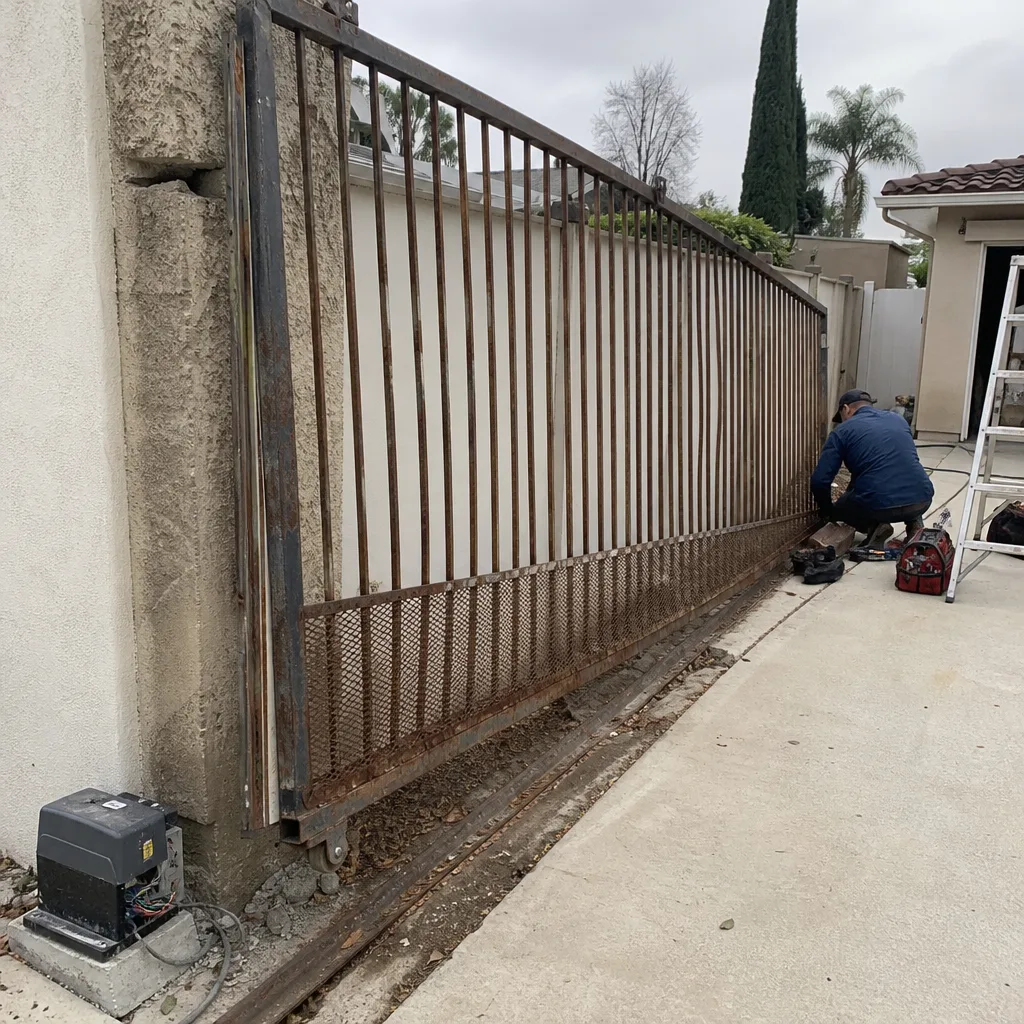 Before
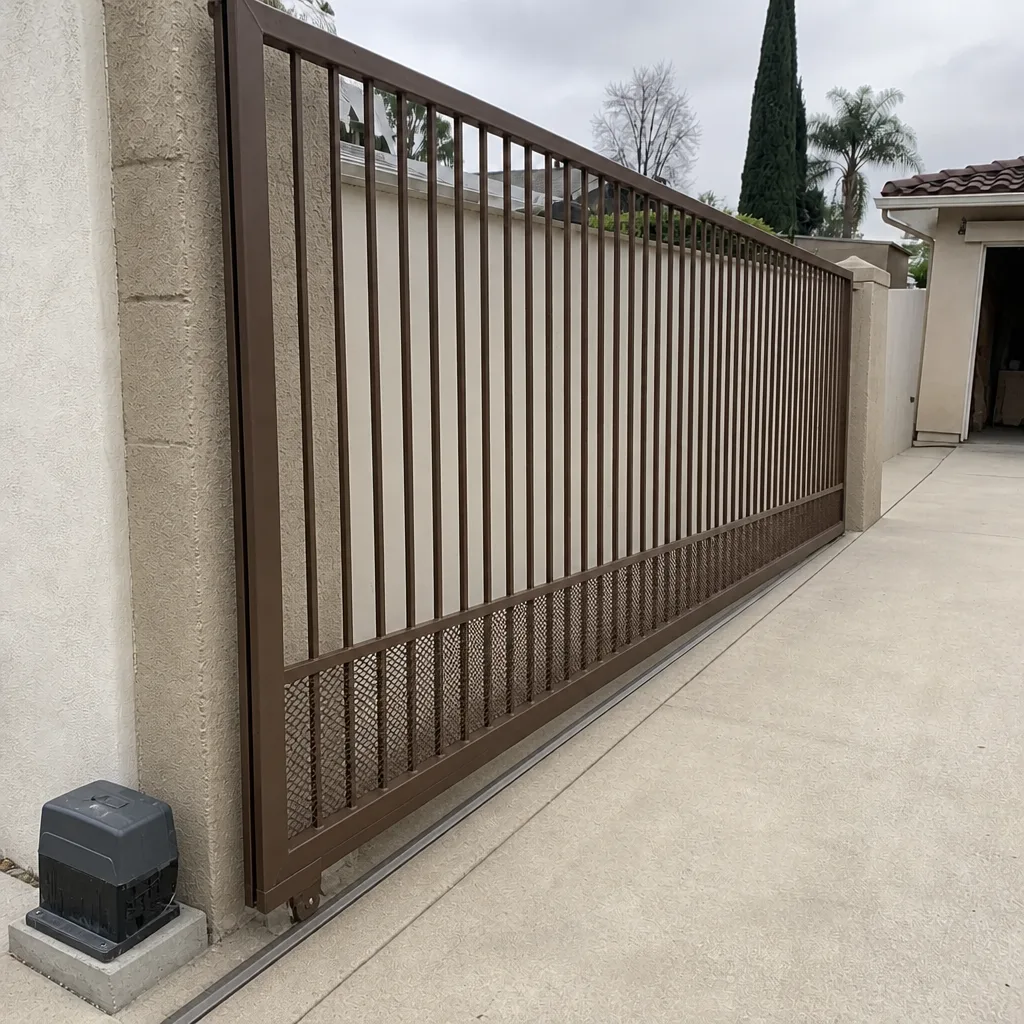 After
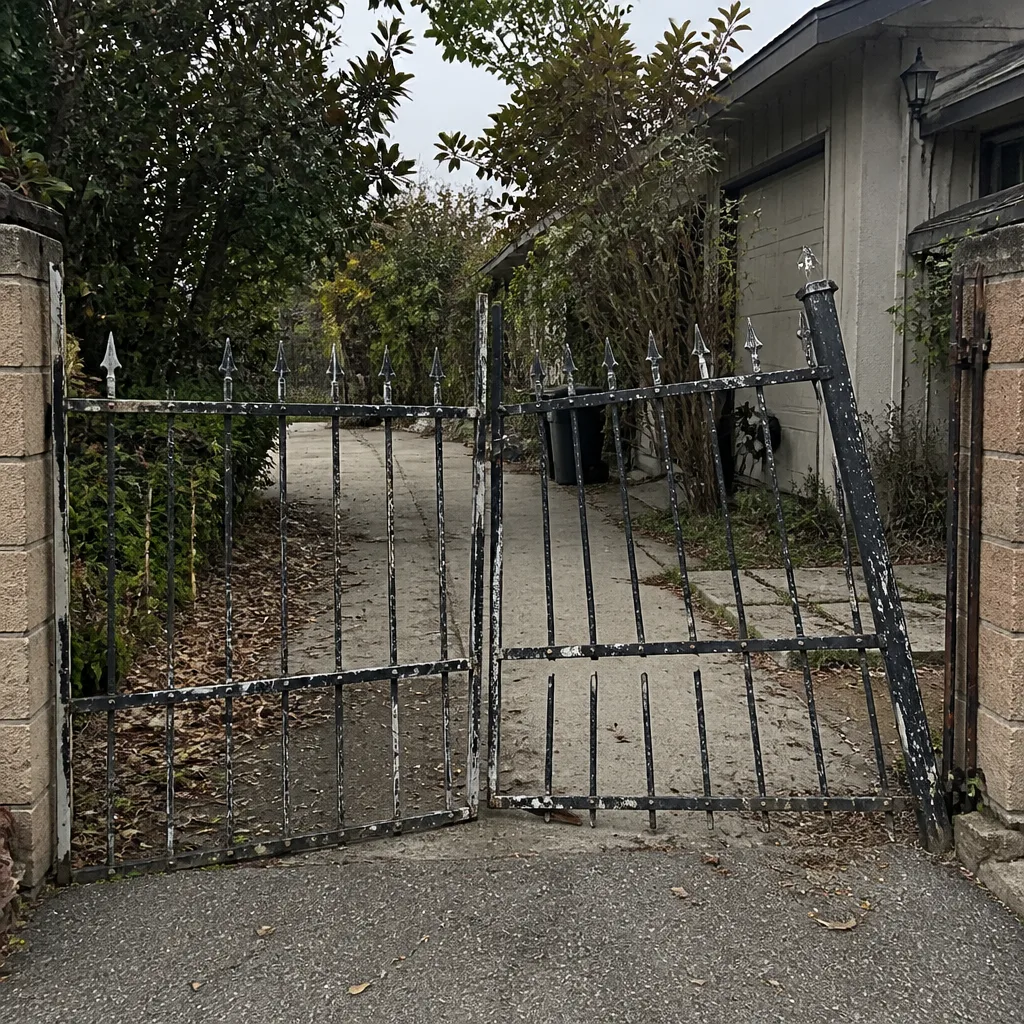 Before
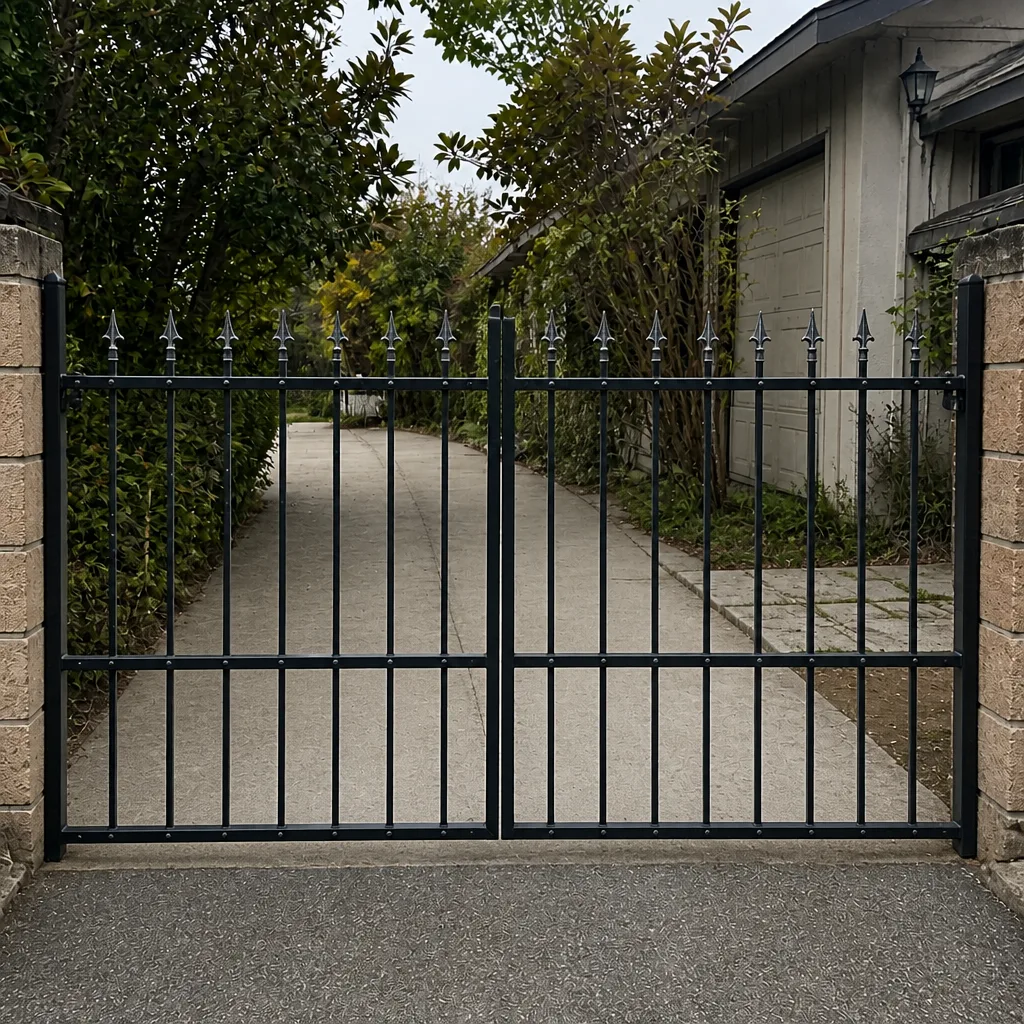 After
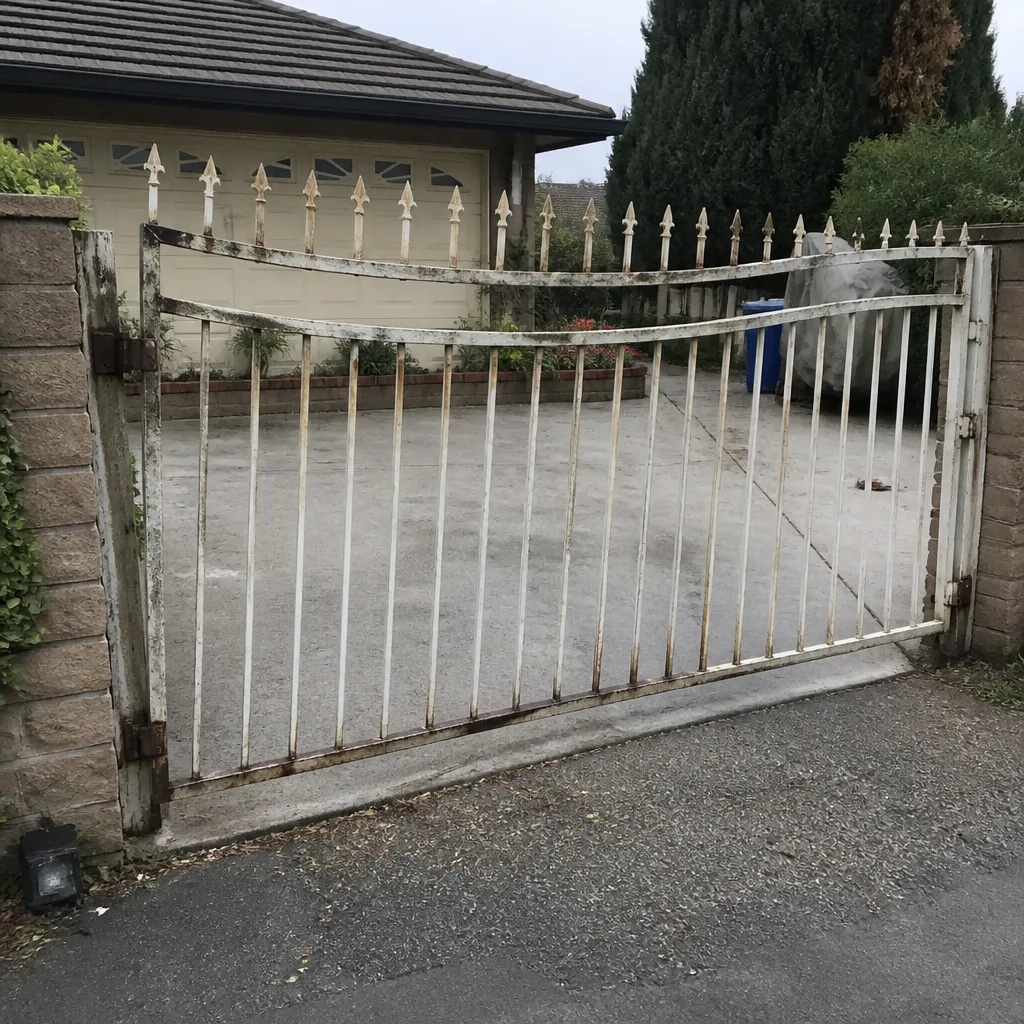 Before
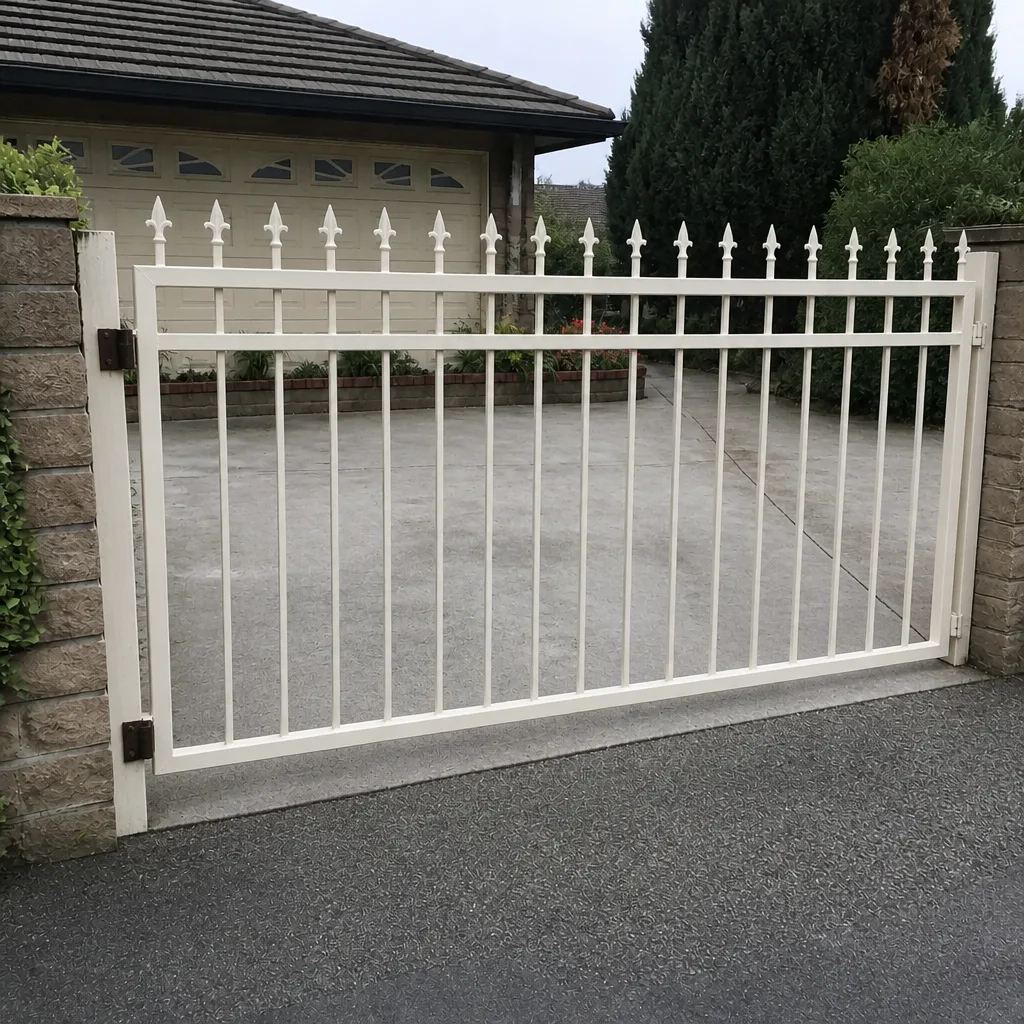 After
When to Call a Professional
Some gate maintenance tasks are genuinely do-it-yourself. Others are not. If you see a cracked weld on a steel gate frame, a post that has clearly moved, or a control board that’s throwing error codes, call someone who works on gates every day. The line between a repairable gate and a replacement often comes down to how quickly the problem is addressed. Gate Repair Yorba Linda offers free estimates in Yorba Linda, and our technicians work on LiftMaster, DoorKing, Elite, Mighty Mule, FAAC, BFT, Linear, Viking, and Ghost Controls systems. We handle both residential driveway gates and light-commercial access systems, from manual gate hinge repairs to full electric operator replacement. If you’re not sure whether a problem is serious, call (855) 382-4716. We answer 24/7, and we’ll help you figure out what you’re dealing with. Fast dispatch from 7am to 7pm, Sunday through Friday.
Frequently Asked Questions
Use a dry-film chain lubricant or a purpose-made chain lube designed for drive chains, not a heavy grease. Heavy grease attracts dust and grit, which creates a grinding paste that accelerates sprocket and chain wear. Apply it twice a year in Yorba Linda’s dry climate.
Test the auto-reverse mechanism annually at minimum, and more often if the gate is used heavily or by children. Use a solid object like a traffic cone, never your body. If the gate fails the test, stop using it in automatic mode and call (855) 382-4716 for a free estimate.
This is usually soil movement. Yorba Linda’s clay-heavy soils shrink in dry weather and swell when wet, which can cause a gate post to lean slightly. The gate isn’t sagging; the post and ground are shifting. A level check will confirm whether post lean is the cause.
Monthly and quarterly visual checks, lubrication, and debris clearing are all reasonable DIY tasks. Annual safety reversal testing and anything involving line voltage wiring or control boards is better left to a professional. Electric gate repair is one of our core services, and we diagnose by brand-specific logic rather than guesswork.
Look for chalky, faded insulation with fine cracks. Healthy wire has a consistent color and a slight sheen. UV damage appears as dull, flat, or white-streaked insulation. Once the jacket cracks, moisture can enter and cause intermittent operator faults. Have suspect wiring replaced before it fails.
We work on LiftMaster, FAAC, BFT, Linear, Viking, Ghost Controls, DoorKing, Elite, and Mighty Mule. That covers entry-level residential openers through commercial-grade slide and swing gate operators. If you know your brand, we already know its failure patterns. Call (855) 382-4716 for a free estimate.
The Bottom Line
Gate maintenance in Yorba Linda is about three things: UV protection, heat management, and soil movement. If you check wiring for UV damage monthly, lubricate with the correct products quarterly, and test safety reversal plus post lean annually, you’ll catch most problems while they’re still cheap to fix. The gate will operate more smoothly, the operator will run cooler, and the safety systems will work when they’re needed. For anything beyond your comfort level, call (855) 382-4716. We answer 24/7, and we’ll send a technician fast dispatch from 7am to 7pm, Sunday through Friday. The written estimate sets the price before any work begins.
Written by the team at Gate Repair Yorba Linda, serving Yorba Linda since 2011.