
Last updated November 4, 2026
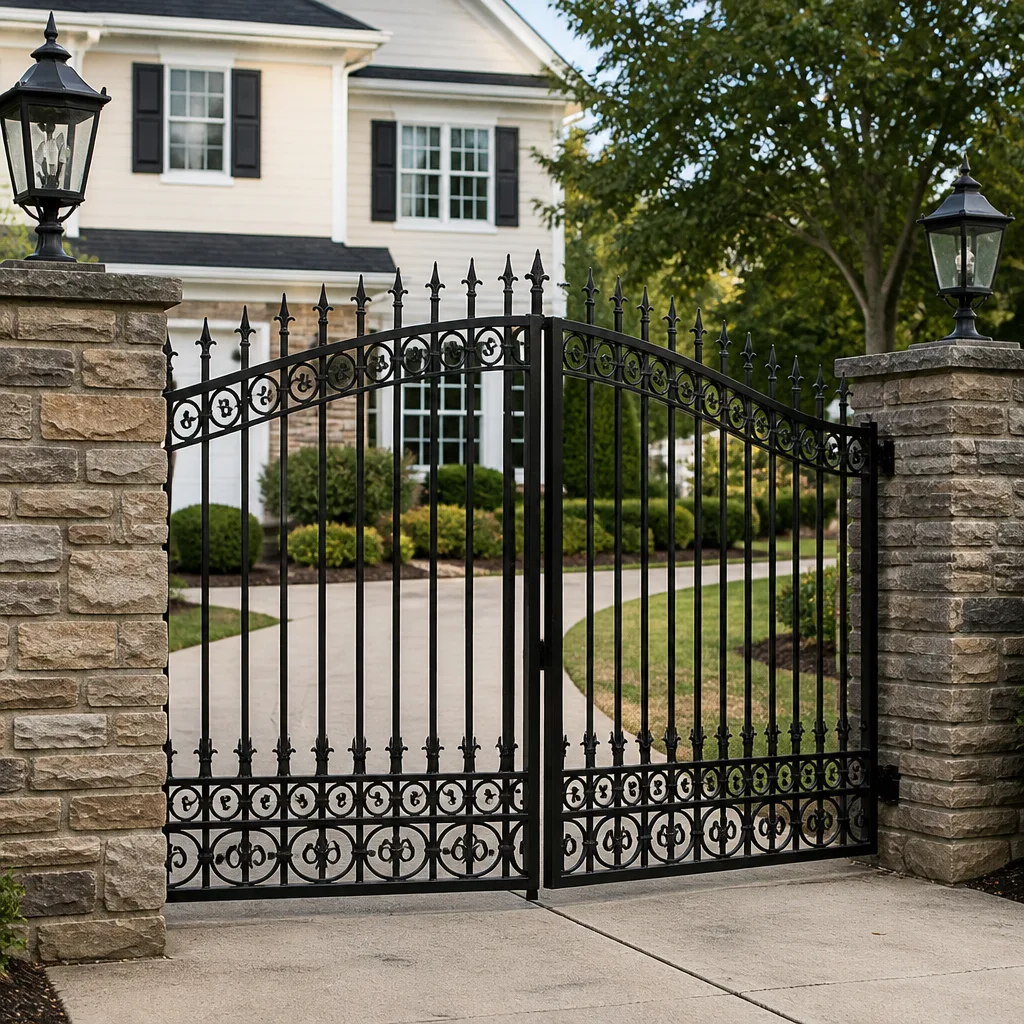 Wrought iron
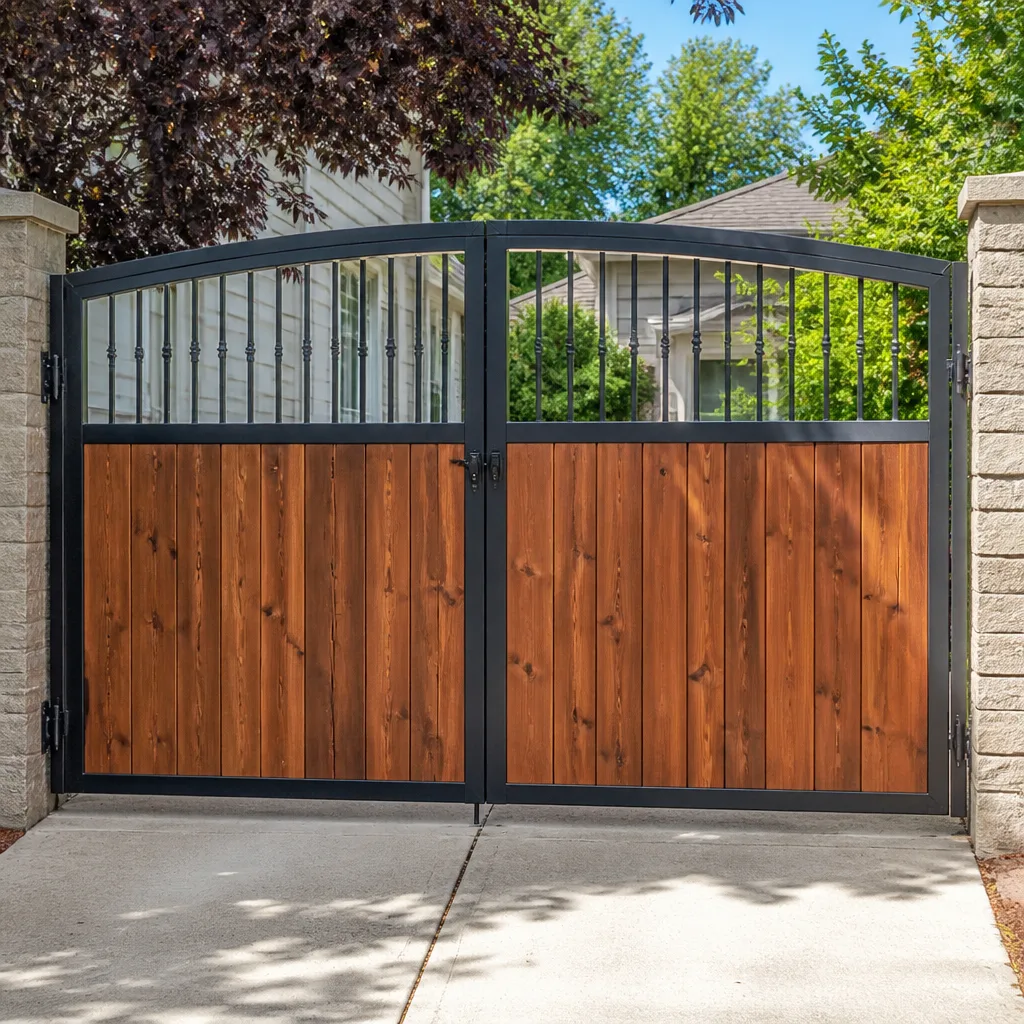 Wood & steel frame
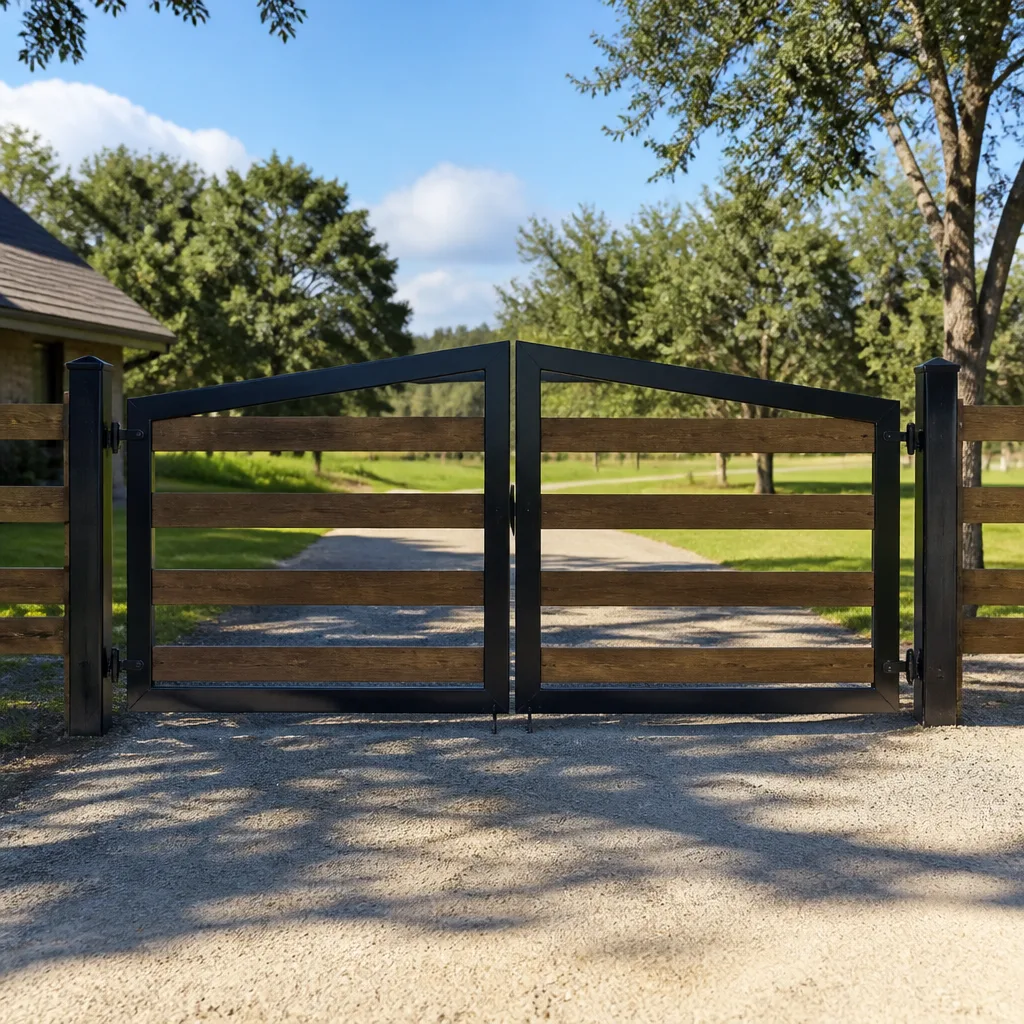 Farm & ranch
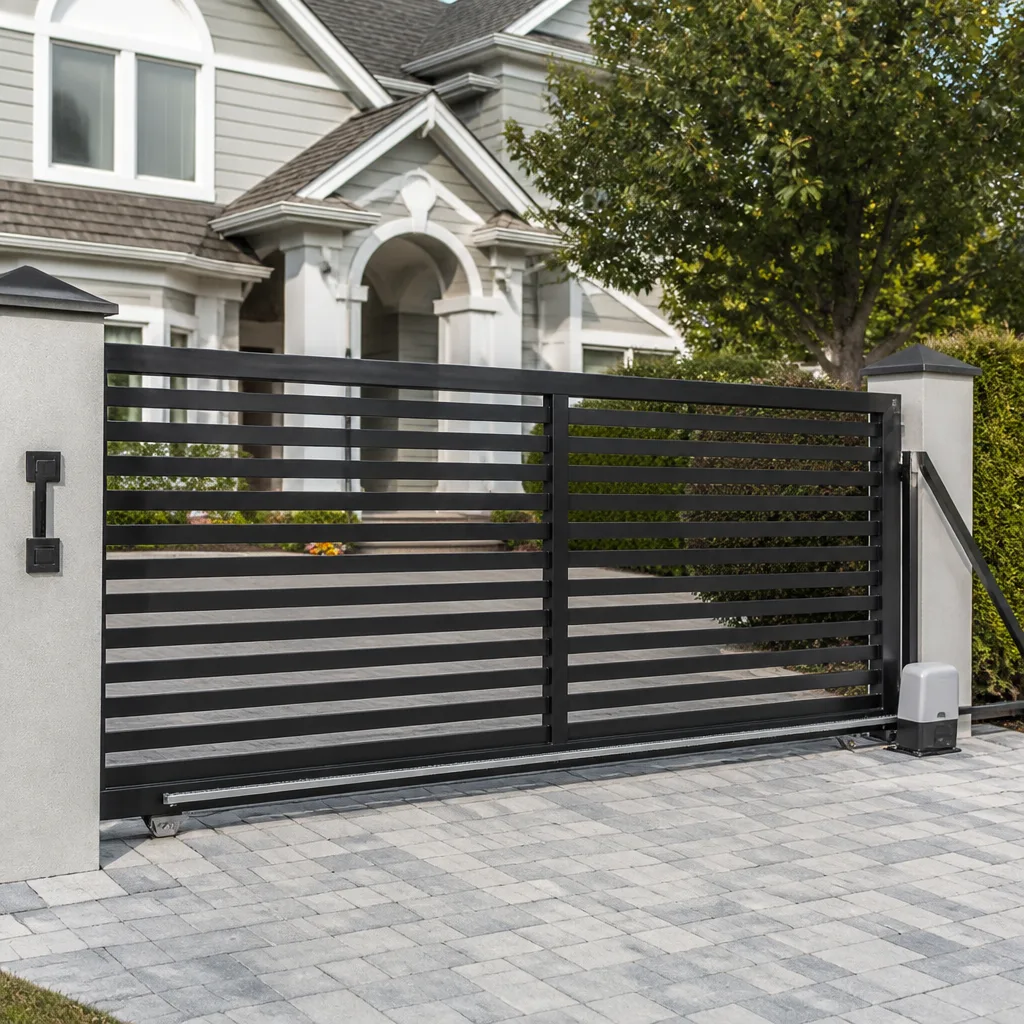 Sliding driveway gates
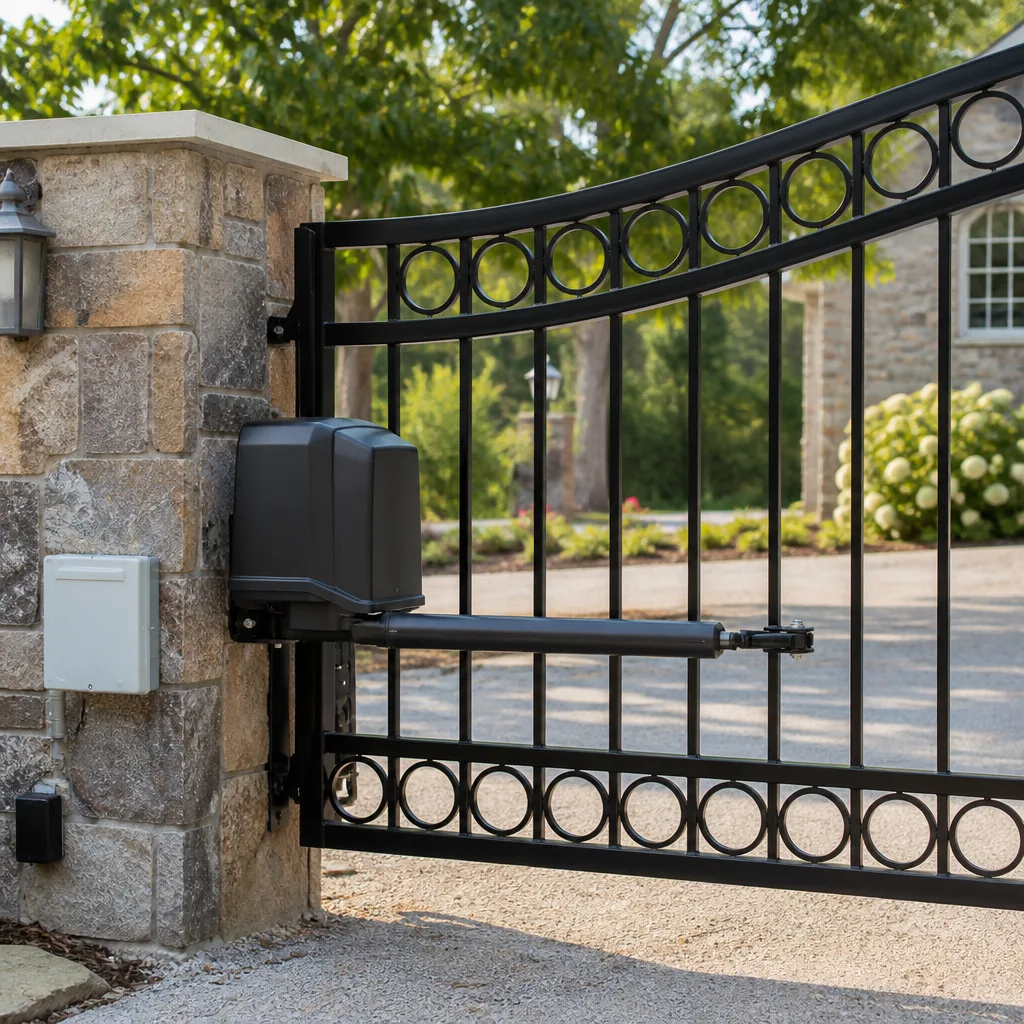 LiftMaster operators
Free on-site gate assessment - hinges, posts, and your LiftMaster or Nice gate operator checked before anything is quoted
The assessment is free and the quote is the invoice.
Get your free estimateGate Repair Emergency Preparedness Guide for Yorba Linda Homes
Most Yorba Linda homeowners tend to think of their automatic gate as a convenience feature. The moment it fails, that perception flips hard. During a power outage, a surprising number of gate owners discover they don’t know where their manual release is, how to find it in the dark, or whether pulling it will make the situation better or worse. That lack of basic knowledge turns a simple mechanical problem into a trapped-vehicle situation or a home left wide open to the street. This guide walks you through the two very different emergencies a gate can create in Yorba Linda: a gate stuck open and a gate stuck closed. You’ll learn how to safely disengage your operator, what temporary security measures actually work, what to check before you call for help, and which improvised fixes will damage your system.
Styles & brands we work with
- Wrought iron
- Wood & steel frame
- Farm & ranch
- Sliding driveway gates
- LiftMaster operators
Quick Answer
Every Yorba Linda homeowner with an automatic gate should know two things before an emergency happens: where the manual release is located, and whether the gate is stuck open or stuck closed. A gate stuck open is a security emergency that requires temporary barriers and a fast call for repair. A gate stuck closed is an access emergency that usually requires disengaging the operator so you can move the gate by hand. Keep your operator brand, model number, and a flashlight near the gate control box, and call a gate specialist rather than forcing the mechanism.
Table of Contents
- Stuck Open: Security Protocols for Yorba Linda Homes
- Stuck Closed: Vehicle Access Emergency Response
- Manual Release Procedures by Operator Type
- Power Outage Gate Protocol
- Emergency Contact Preparation
- Post-Emergency Inspection Checklist
- Common Mistakes to Avoid
- When to Call a Professional
- Frequently Asked Questions
- The Bottom Line
Stuck Open: Security Protocols for Yorba Linda Homes
A gate that refuses to close is the more dangerous of the two emergencies, and Yorba Linda’s hillside lots and long driveways make it worse. Many homes in this area have gates that sit well back from the street, which means an open gate is an invitation that isn’t visible from the front windows. The first priority is a temporary barrier. The second priority is understanding why the gate stopped mid-cycle or won’t respond at all.
Here is what to do, in order:
- Check the safety sensors. Most open gate failures start with a blocked or misaligned photo eye. A branch, a trash bin, or a parked car in the sensor path will tell the system to hold the gate open as a safety measure. Clear the path first.
- Test the control box. Look for a blinking LED or error code on the operator board. Write down what it shows before you touch anything else. That code tells a technician exactly where the failure began.
- Throw the manual release. If the gate is stuck halfway or fully open and won’t respond, use the release to push the gate closed by hand. Do this only if the track or hinges are not visibly broken.
- Block the opening. If you cannot get the gate closed, place your vehicles across the driveway opening and lock any gate access doors. This is a stopgap measure, not a permanent fix.
- Call for repair. A gate that stays open overnight in Yorba Linda is a real security exposure. Electric gate repair is the fastest path back to a working barrier.
We have worked on LiftMaster and BFT systems throughout Yorba Linda where the gate held open because a single sensor wire had been chewed through by rodents or knocked loose by a gardener’s trimmer. The operator was fine. The wiring wasn’t. Knowing your brand matters because LiftMaster boards display faults differently than BFT or FAAC boards, and reading that display correctly saves a diagnostic trip in the wrong direction.
Stuck Closed: Vehicle Access Emergency Response
When a gate won’t open, you aren’t just inconvenienced. You are blocked from leaving your property, and the gate has now trapped your vehicles. This is the scenario most Yorba Linda homeowners describe with real frustration, because it forces a decision: climb over, try to force it, or disengage the operator and move the panel by hand. The answer depends on whether your gate swings or slides.
A swing gate that won’t open usually means the operator is dead, the control board has failed, or the leaf has dropped on its hinges. A slide gate that won’t open usually means the chain or belt has jumped the sprocket, the track is blocked, or the motor capacitor has failed. Trying to muscle either type open without disengaging the operator is the most common cause of a repair bill that climbs from a simple board replacement into a gearbox rebuild.
The safe procedure is to locate the manual release, disengage the operator, and test whether the gate moves freely by hand. If it moves freely, the problem is electrical or mechanical inside the operator. If it doesn’t move at all, the problem is in the track, hinges, or physical structure of the gate itself. Knowing this difference saves a lot of time when you call for help.
For a stuck-closed gate in Yorba Linda, do not attempt to drive through the gate or use a tow strap to pull it open. The force required to bend a panel or break a hinge is far less than most people think, and a bent gate section often means replacing the entire leaf rather than repairing the operator.
Manual Release Procedures by Operator Type
Manual releases are not universal. A slide gate operator decouples differently than a swing gate operator, and within those families, chain-drive and belt-drive systems have different failure points. Here is the breakdown for the most common setups in Yorba Linda.
Swing gate operators
Most residential swing operators have a release handle or key that separates the drive arm from the gate leaf. On LiftMaster swing units, there is a small release lever on the top of the operator that you rotate a quarter turn. On FAAC swing operators, the release is typically a keyed cylinder on the drive housing. Once released, the gate should swing freely by hand. If it binds partway through the arc, the hinge is failing, and forcing it further will tear the hinge post.
Slide gate operators
Slide gates use either a chain drive or a belt drive. A chain-drive slide gate has a visible chain running the length of the track, and the operator has a clutch or release handle that disconnects the drive sprocket from the motor. A belt-drive slide gate uses a reinforced rubber belt, and the release is sometimes a smaller lever that loosens belt tension enough to push the gate manually.
One critical difference: a slide gate with the operator disengaged can be moved by hand, but it will roll based on momentum. On a sloped Yorba Linda driveway, that momentum can carry the gate past the end stop and off the track. Always keep a hand on the gate panel and stop it before it reaches the end of the rail.
If you don’t know which type you have, open the control box and look at the drive mechanism inside. If you see a toothed belt, it’s belt-drive. If you see a looped metal chain, it’s chain-drive. This is the kind of information we use at Gate Repair Yorba Linda to arrive prepared for the right diagnosis on the first visit.
Power Outage Gate Protocol
A power outage in Yorba Linda is usually brief, but it’s long enough to reveal which homeowners have battery backup and which don’t. Here is how to know before the next outage happens.
Battery backup on a gate operator works like a small UPS. When AC power drops, the battery takes over and powers the operator at normal speed for a limited number of cycles. Some operators have this built in as a standard feature. Others require a separate battery kit installed in the control box. The simplest way to check: open the control box and look for a battery. If there’s a sealed lead-acid or lithium battery wired to the board, you have backup. If the board runs straight to the AC transformer with no battery pack, you don’t.
Our experience with BFT, FAAC, Linear, and LiftMaster operators is that the answer varies by brand and by model generation. LiftMaster’s commercial and high-end residential boards usually accept a battery. BFT and FAAC systems sold for light-commercial use often have battery terminals built into the board, but the battery itself was a purchasable option. Linear’s residential line is mixed. If you can’t identify what you have, take a photo of the board and show it to a technician any time a gate repair is needed. We’ll tell you whether a backup battery can be added to your existing system.
Without battery backup, the gate will not respond during an outage unless you manually release it. We recommend testing that release before the outage happens, in daylight, when you aren’t rushing. It’s a two-minute task that turns a 10 PM outage from a crisis into a minor annoyance.
Emergency Contact Preparation
The fastest emergency repair calls are the ones where the homeowner already has the right information in hand. When you call a gate specialist, have these details ready:
- Operator brand. Look on the operator cover or control board. LiftMaster, FAAC, BFT, and Linear all print the name on the housing.
- Model number. Usually on a label inside the control box or on the rear of the operator. The model number narrows down board compatibility and available parts before a technician even arrives.
- Gate configuration. Single swing, dual swing, single slide, or dual slide. Also note the approximate width and height of the gate leaf.
- What the gate is doing right now. Stuck open, stuck closed, moving halfway then reversing, or making noise but not moving. That distinction changes the first diagnostic step.
- What changed recently. A power flicker, a landscaping crew, heavy rain, a branch falling, a new keypad. Recent context often explains the failure.
Yorba Linda homes have driveways that range from short, steep approaches in older hillside neighborhoods to long, flat runs in newer developments. The gate’s location on the property and the approach angle matter for a technician bringing the right parts and equipment. Mention whether the gate is at street level or set back from the road.
Having a photo of the operator and control board on your phone costs nothing and saves a full diagnostic cycle. Snap a picture now, before you need it.
Post-Emergency Inspection Checklist
After a gate has been manually operated or force-released, the system should be inspected before you trust it with another automated cycle. Manual operation masks damage. A gate that moved freely by hand might have a cracked hinge that only binds under motor load. A chain that jumped the sprocket might sit in place until the next reverse cycle, then snap.
Here is what to have checked after any manual operation or release:
- Hinge pins and weld points. A swing gate that was pushed with pressure on the wrong end can crack a weld without visibly separating the metal.
- Track rollers and guide brackets. A slide gate moved by hand may have shifted a roller off center, which stresses the chain and motor on the next automated run.
- Chain or belt tension. Manual movement often loosens a chain by a fraction of an inch. That fraction becomes a loud rattle or a jump under load.
- Limit switch alignment. If the gate was moved past its normal end points, the limit switches are now out of calibration, and the operator will fight the gate on every cycle.
- Safety sensor alignment. Any physical movement of the gate leaf can knock a photo eye or edge sensor out of line, which will cause hold-open behavior on the next run.
- Operator gearbox and motor mounts. A forced gate with the operator still partially engaged can shear a keyway or crack a mounting plate. These failures may not show up until the gate runs under power again.
We typically recommend this inspection after any emergency that required manual operation. It’s a short visit, and it prevents the second failure that usually follows a force-release within a month in Yorba Linda’s stop-and-go driveway conditions.
Common Mistakes to Avoid
- Force-opening a gate with the operator still engaged. This is the most expensive mistake a homeowner can make. The operator’s gearbox wasn’t built to resist human force, and burning out a motor or stripping a gear turns a control board replacement into a full operator swap.
- Using a vehicle to push or pull the gate. A car bumper applies hundreds of pounds of force. Gate panels are aluminum or light steel, and they bend before the operator releases. A bent panel is a structural replacement, not a repair.
- Propping a gate open with bricks, wood blocks, or wedges. A slide gate can ride up off the track and drop, and a swing gate can drift and shear the prop out of place. Temporary props create a false sense of security and often add track damage.
- Ignoring the error code. Many Yorba Linda homeowners clear the blinking LED without noting the code, hoping a reset fixes the problem. Sometimes it does. But when the failure recurs two days later, the lost code means starting diagnosis from zero.
- Testing the manual release for the first time during an outage. Rain, darkness, and panic are bad teachers. Test the release in daylight now, and you’ll know exactly what to do when the power drops at night.
- Assuming a battery backup exists because the gate has a keypad or intercom. An access keypad has nothing to do with operator power. The only way to know is to open the control box and look.
- Calling a general handyman for a board-level failure. Replacing a control board on a FAAC or BFT operator requires matching firmware, limit settings, and safety inputs. A guess at the board model is expensive when it’s wrong.
When to Call a Professional
Call a professional the moment you see smoke from the operator, smell burning electronics, hear metal grinding in the gearbox, or find the gate off its track entirely. These are catastrophic failures, and further cycling only strips the remaining parts. You should also call when a gate partially strangles a remote signal, operates only sometimes, or reverses for no clear reason. Intermittent failures are almost always a board or wiring issue that won’t get better on its own.
For manual gates that have become hard to open or close, a professional can determine whether the hinges are worn, a post has shifted, or the gate frame itself has sagged. In Yorba Linda’s varied terrain, uneven settling under a gate post is a common cause of gradual binding. Gate Repair Yorba Linda offers free estimates in Yorba Linda. Call (855) 382-4716 and describe what the gate is doing. We answer 24/7. Fast dispatch from 7am to 7pm, Sunday through Friday.
Frequently Asked Questions
Block the driveway opening with your vehicles, lock any pedestrian gates, and call for electric gate repair right away. A gate that won’t close is a security exposure, and most failures that hold a gate open are sensor or board issues a specialist can resolve quickly. Call (855) 382-4716. We answer 24/7. Fast dispatch from 7am to 7pm, Sunday through Friday.
Yes, every automatic gate has a manual release, but the method differs between swing and slide operators, and between chain-drive and belt-drive systems. The release is usually on the operator itself or inside the control box. If you haven’t tested yours before, do it now in daylight so you know the procedure when an outage hits.
Open the control box and look for a sealed battery wired to the operator board. If you see only a transformer and no battery pack, you don’t have backup power. Some brands like LiftMaster and BFT support add-on batteries even if the original install didn’t include one. A gate specialist can confirm what your board supports.
Know your operator brand, model number, gate configuration (swing or slide, single or dual), what the gate is currently doing, and anything that changed recently. Photos of the operator and control board speed up diagnosis considerably. Have this information ready before you call, especially in an emergency.
Emergency gate repair costs vary by failure type, operator brand, and parts needed, so no honest technician will quote a single number without seeing the gate. A stuck gate with a bad sensor is naturally less involved than a gearbox rebuild on a slide operator. The written estimate sets the final price, and our estimates in Yorba Linda are free. Call (855) 382-4716 for an exact quote on your gate.
A chain-drive slide gate uses a metal chain running the length of the track to move the gate, while a belt-drive uses a reinforced rubber belt. Chain drives are more common on heavier gates and tend to need periodic tension checks. Belt drives run quieter but can slip if the tension loosens. Both have manual release mechanisms, but the lever placement and release direction can differ by brand and model.
The Bottom Line
Yorba Linda homes rely on gates for security and access every day, yet most owners don’t know how to operate theirs manually until an emergency forces the question. A stuck-open gate is a security risk that needs temporary barriers and prompt repair. A stuck-closed gate is an access problem that usually responds to a manual release, provided you know where it is and how it works. Know your operator brand, test the release before you need it, keep a photo of the control board, and don’t force a gate that won’t move. Call (855) 382-4716 for free estimates in Yorba Linda. We answer 24/7. Fast dispatch from 7am to 7pm, Sunday through Friday.
Written by the team at Gate Repair Yorba Linda, serving Yorba Linda since 2011.
See the difference
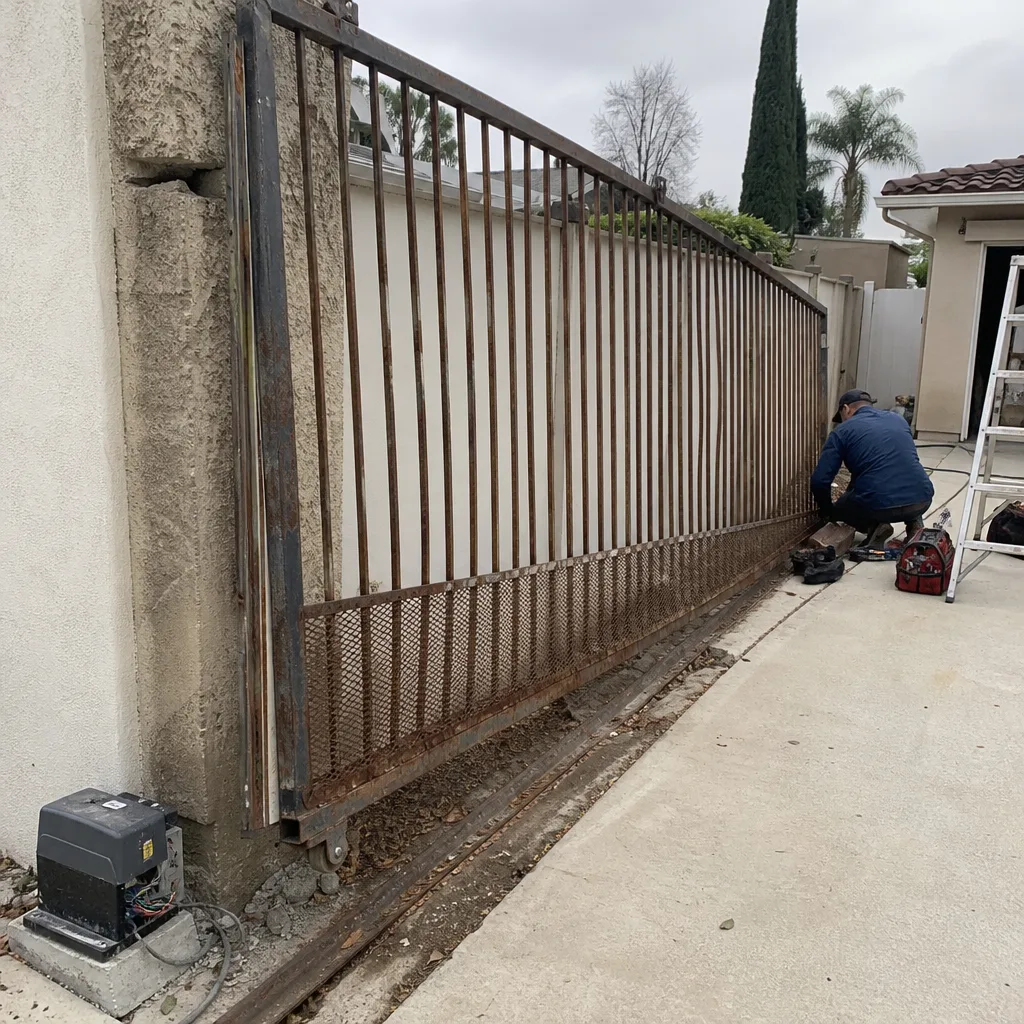 Before
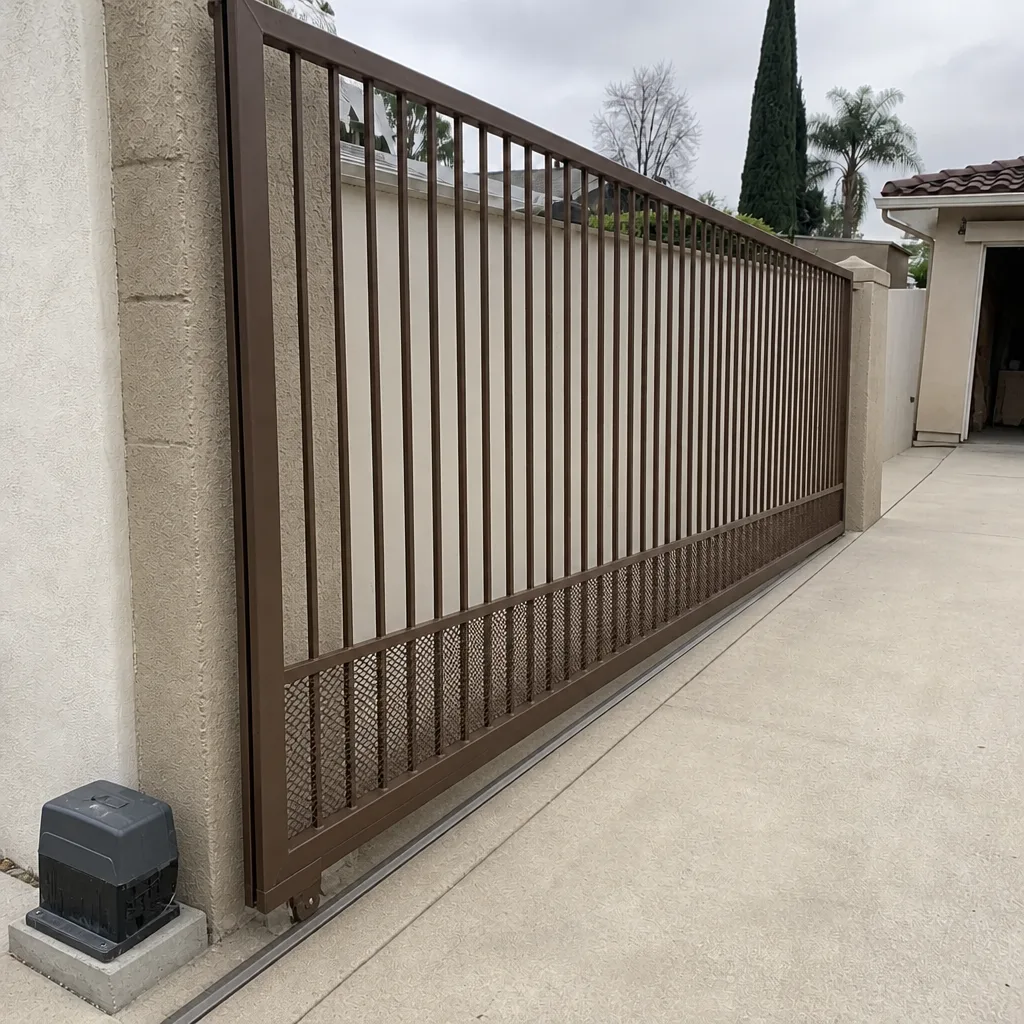 After
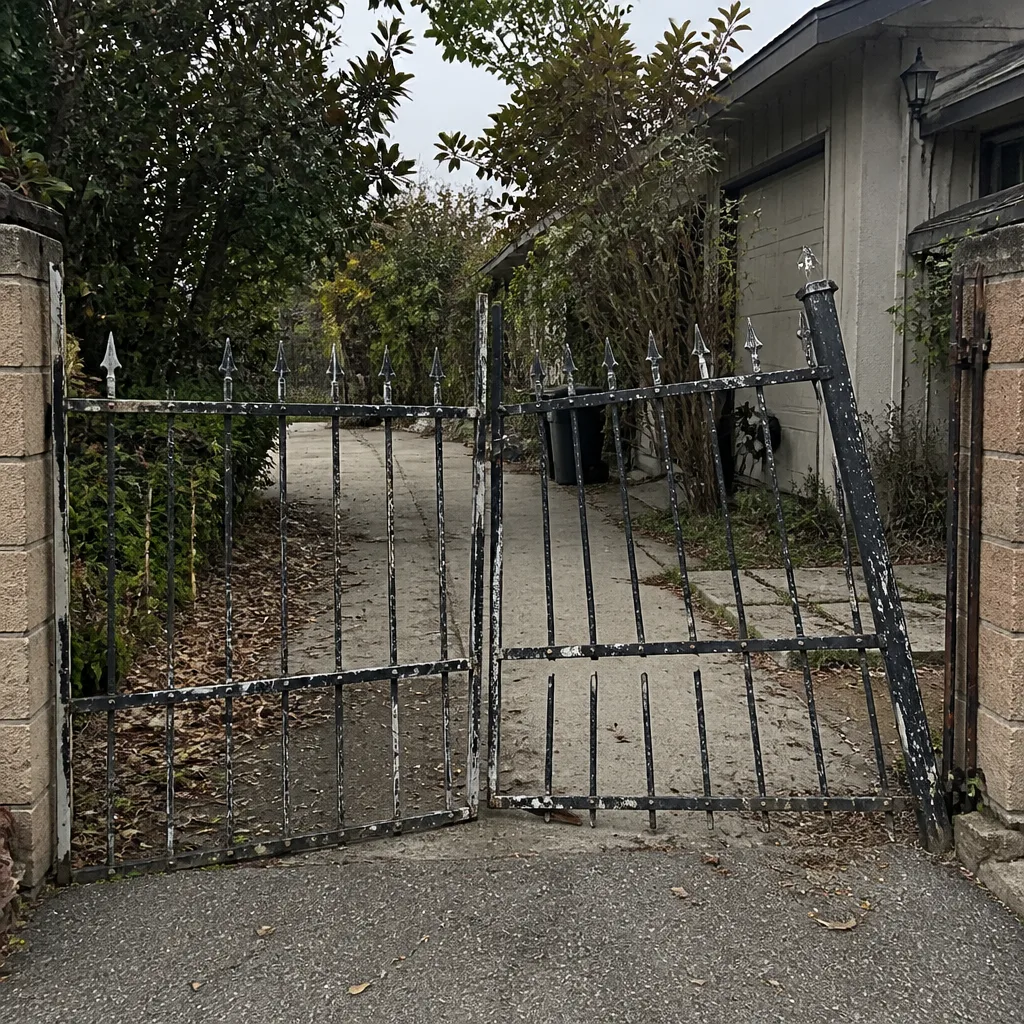 Before
 After
 Before
 After