
Last updated November 4, 2026
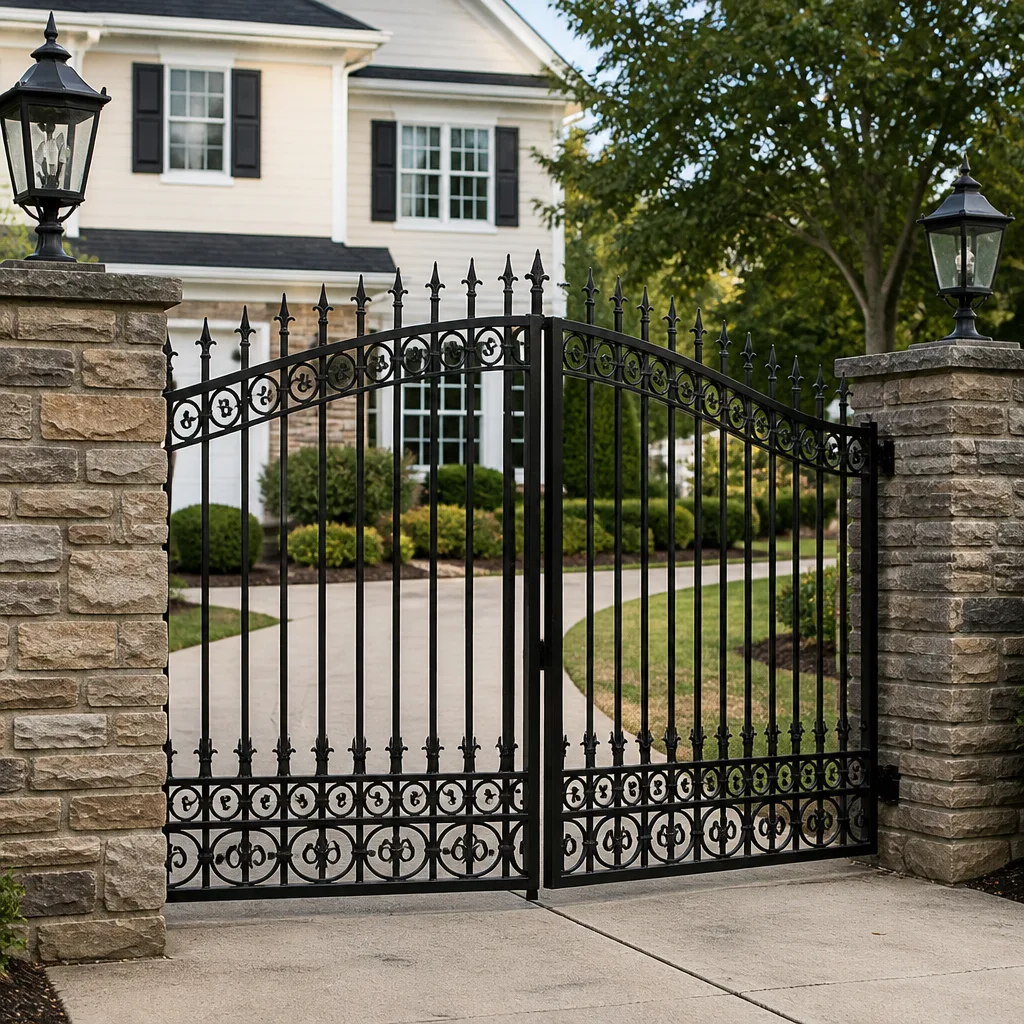 Wrought iron
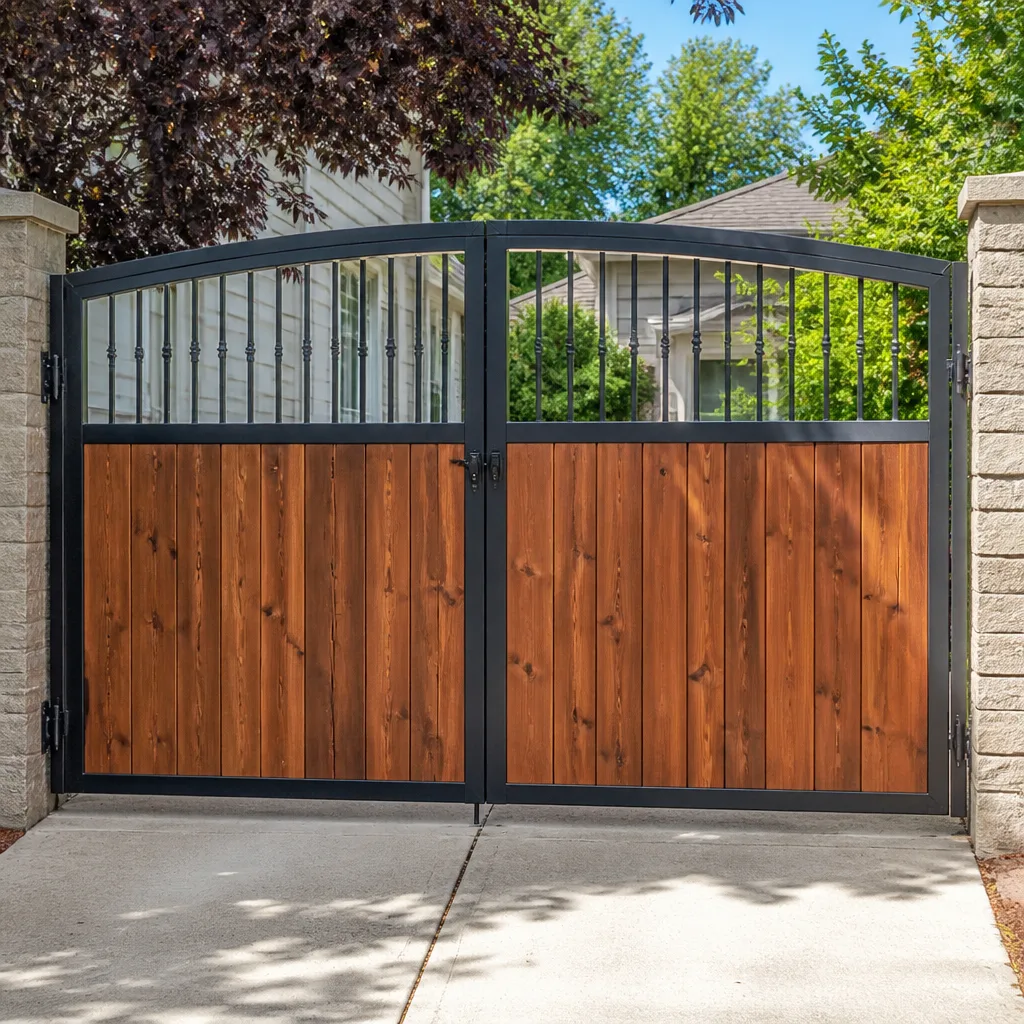 Wood & steel frame
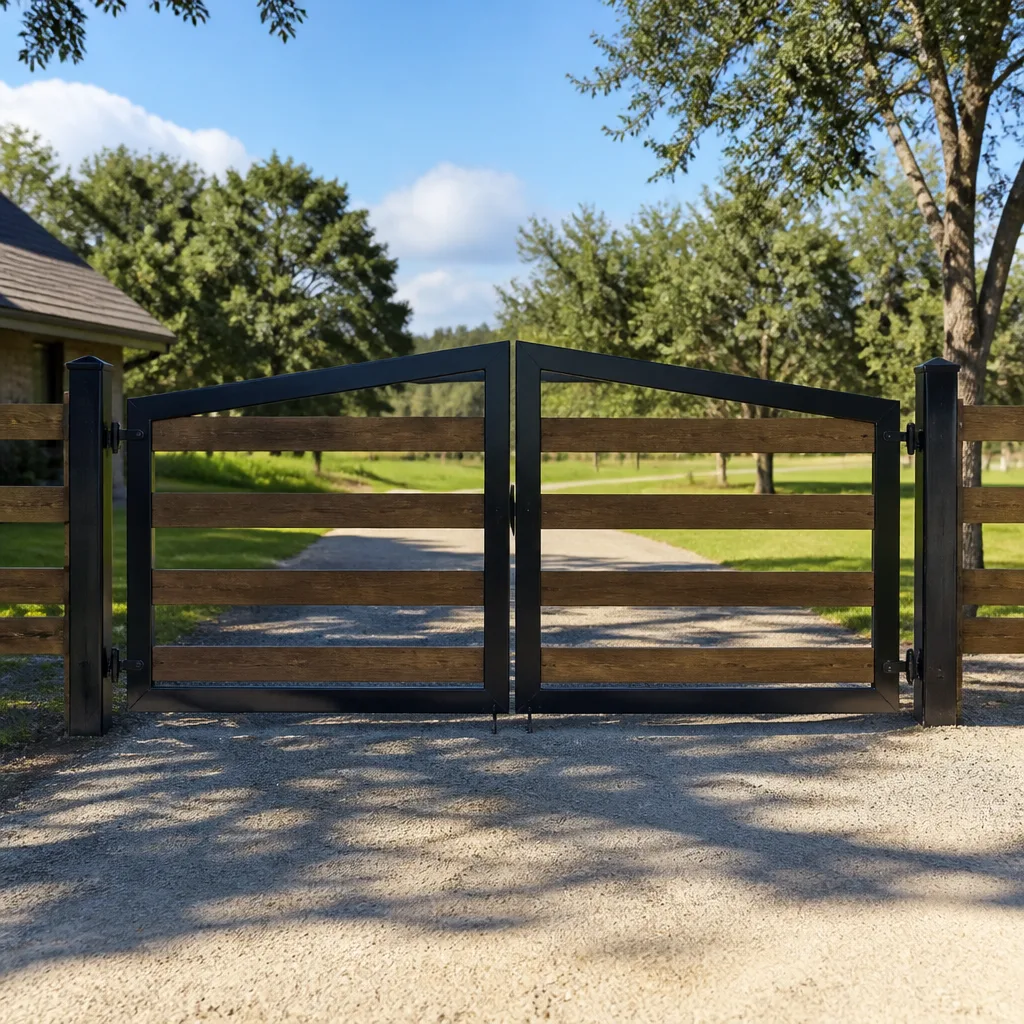 Farm & ranch
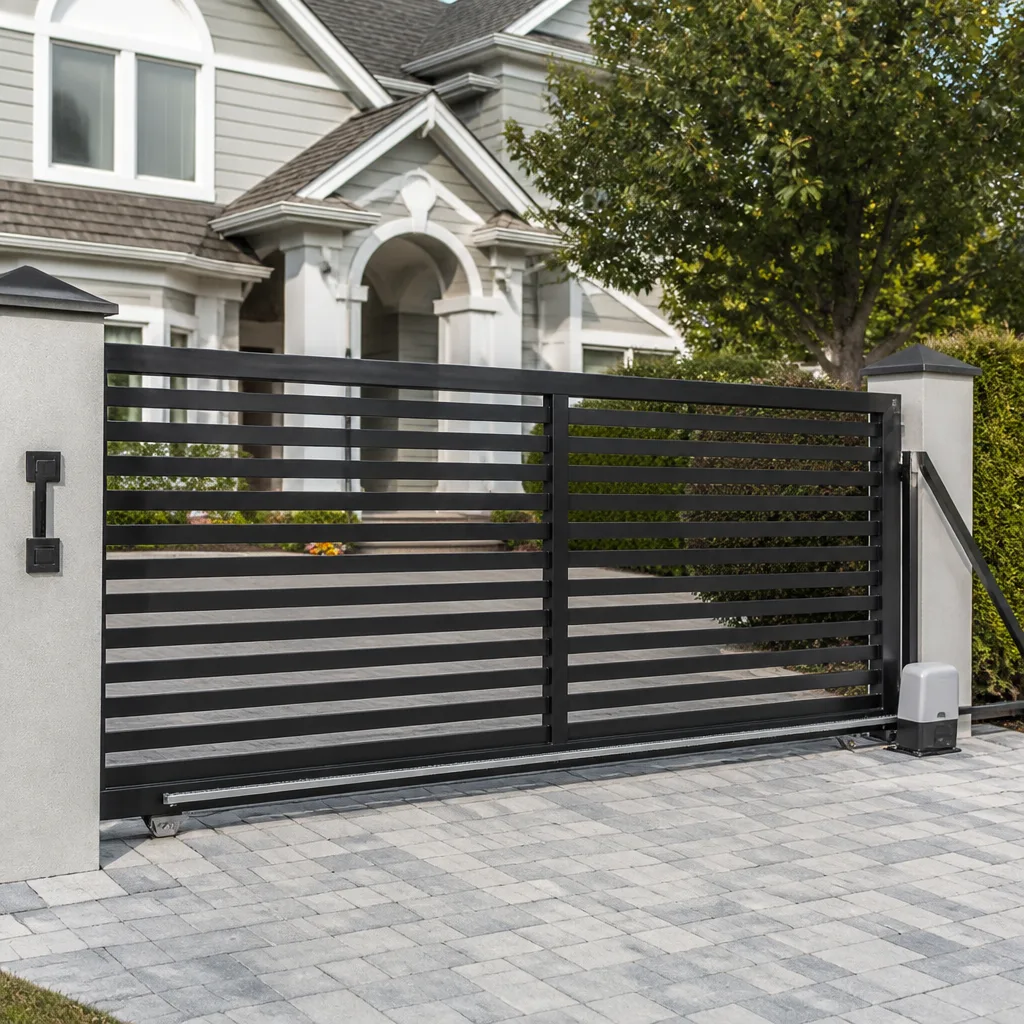 Sliding driveway gates
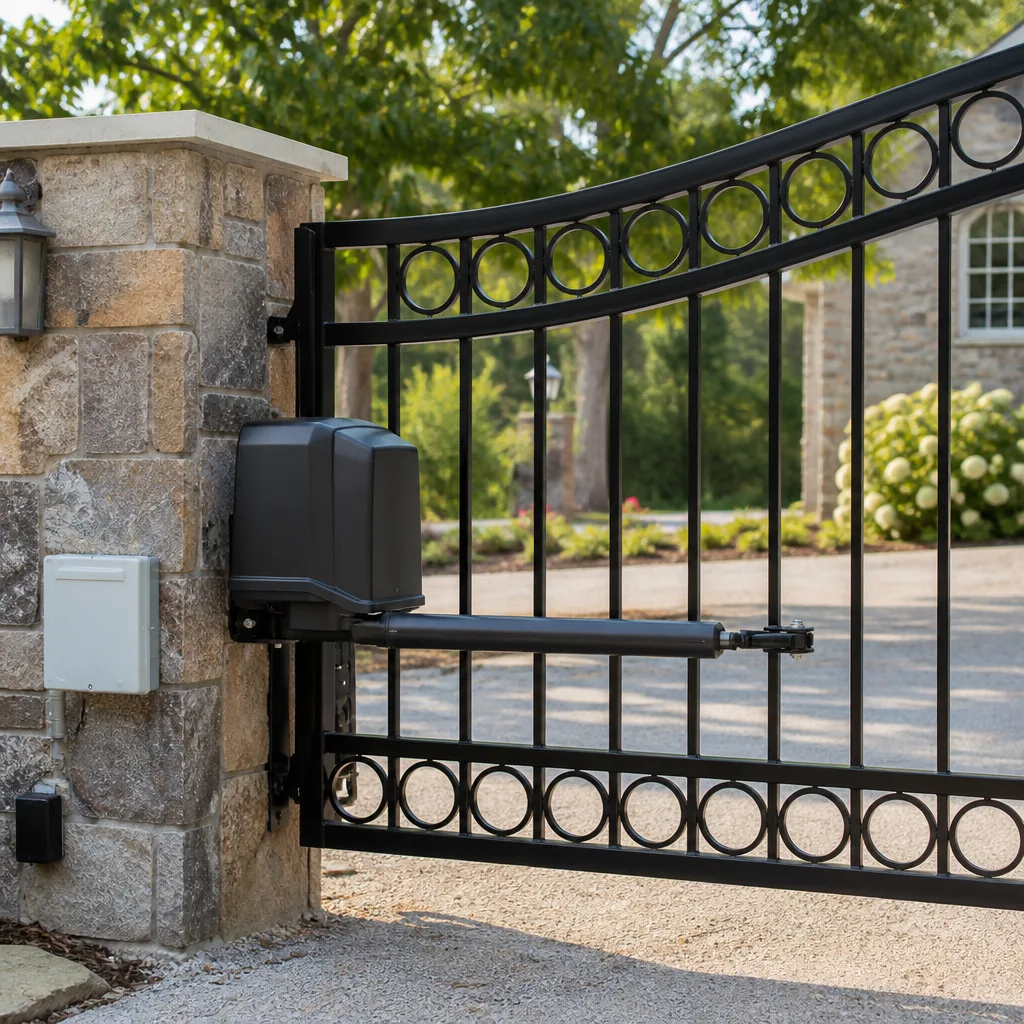 LiftMaster operators
Free on-site gate assessment - hinges, posts, and your LiftMaster or Nice gate operator checked before anything is quoted
The assessment is free and the quote is the invoice.
Get your free estimateDIY vs Professional Gate Repair: The Yorba Linda Homeowner’s Decision Guide
A gate that groans, sticks, or refuses to open feels like a small failure until you’re late for work and trapped in your own driveway. Most Yorba Linda homeowners we talk to aren’t afraid of tools; they’re afraid of making the wrong call on a machine they don’t fully understand. This guide draws a precise line between what you can safely handle yourself and what belongs in the hands of a gate-specific technician, because treating every gate problem as either a YouTube project or an automatic service call costs you money in both directions.
Quick Answer
About a third of common gate issues in Yorba Linda are genuinely safe DIY tasks: remote reprogramming, hinge lubrication, cleaning photo-eye sensors, and tightening visible hardware. Anything involving gate operator wiring, circuit boards, spring or tension systems, structural posts, or slide-gate tracks carries electrical, stored-energy, or liability risk that makes professional service the rational choice. If your gate uses an electric operator and the problem is not a dead battery or a dirty sensor, call a gate specialist before you open the control box.
Styles & brands we work with
- Wrought iron
- Wood & steel frame
- Farm & ranch
- Sliding driveway gates
- LiftMaster operators
Table of Contents
- What Gate Repairs Are Actually Safe to DIY?
- The Danger Zone: Stored Energy, Wiring, and Liability
- The UL 325 and Insurance Angle Most Guides Skip
- The Real Cost Comparison: Parts vs. Professional Service
- Where DIY Savings Actually Disappear
- How to Be a Useful DIY Participant When You Hire Out
- What Yorba Linda Homeowners Should Know About Local Gate Systems
- Why Gate Brand Matters More Than Most Homeowners Expect
What Gate Repairs Are Actually Safe to DIY?
Let’s start with the category where we tell customers to go ahead and save the service call. These tasks share three traits: they involve no stored mechanical energy, no live electrical components, and no structural load. They’re the gate equivalent of changing a light bulb or tightening a cabinet hinge.
In our experience working on Gate Repair Yorba Linda systems across the city, these are the tasks that rarely cause problems when a careful homeowner handles them:
- Remote and keypad battery replacement. Open the remote case, swap the battery, test the range. If it still doesn’t work after a new battery, that points to a receiver or board issue, not a battery issue.
- Photo-eye sensor cleaning. Dust, spider webs, and morning sprinkler overspray are constant companions in Yorba Linda. Wipe the lens with a soft cloth. Misalignment is also common: the small indicator light on the sensor should be steady, not blinking.
- Hinge and wheel lubrication. A can of white lithium grease on the hinge pins and roller wheels quiets most metal-on-metal groaning. Do this every six to eight months in our dry climate, where fine dust accelerates wear.
- Tightening visible bolts and brackets. Vibration loosens hardware over time, especially on heavier gates. A socket wrench on the hinge bolts and post brackets is straightforward. If a bolt spins without tightening, stop: the threaded insert or post may be stripped, which is a bigger job.
- Adjusting minor limit switch settings on simple swing gates. If your gate opens too far or not far enough and you have a basic single-family operator like a Mighty Mule or Ghost Controls unit, the manual usually covers small limit adjustments. Stop at the first step that says “remove the cover and test with a multimeter.”
Notice what’s missing from that list: springs, cables under tension, operator circuit boards, underground wiring, and any repair that requires propping the gate open while working underneath it. Those belong in a different category.
The Danger Zone: Stored Energy, Wiring, and Liability
Here’s the part most online DIY guides gloss over, because “just follow these steps” makes better content than “here’s why you shouldn’t.” Gate systems concentrate dangerous forces in ways that aren’t obvious until something slips.
Tension and torsion hardware. A heavy driveway gate carries hundreds of pounds. The springs, tension rods, and cables that counterbalance that weight store enormous energy. When a cable snaps or a tension rod lets go during amateur servicing, the released force can break bones or worse. This is categorically different from, say, replacing a light fixture. A residential gate panel falling from its tracks can crush whatever is underneath it, and slide gates that leave their tracks during a repair become unguided weight moving in whatever direction momentum takes it.
Operator wiring and power. Automatic gates run on low-voltage control wiring, but the operator itself connects to a 110-volt or 120-volt feed from your panel in most Yorba Linda homes. The control board may look like a circuit board from a computer, but it is not isolated like one: it bridges your household current and the motor. Shorting the wrong terminal while the power is connected burns boards, trips breakers, and in a worst case delivers a shock. We’ve seen homeowners replace a $40 capacitor only to destroy a $400 control board because the unit was still connected to power when they started.
The liability layer. An automatic gate is a powered machine guarding your property boundary. If you service the operator yourself and that gate later strikes a person, a vehicle, or a delivery driver, your homeowner’s insurance carrier will ask exactly one question: who last worked on this system? If the answer is “I did,” you have moved yourself from policyholder to unlicensed service provider in the claims adjuster’s view. That shifts the risk calculus in ways most homeowners never think about until it’s too late.
The UL 325 and Insurance Angle Most Guides Skip
This is the section we wish more Yorba Linda homeowners read before opening their gate operator cover. It’s not exciting, but it’s the difference between a covered claim and a denied one.
UL 325 is the safety standard that governs automatic gate operators in the United States. It requires specific entrapment protection: photo-eyes, edge sensors, or both, depending on the installation. When a gate operator leaves the factory, it is certified compliant. When someone who is not trained in gate work opens that operator and modifies wiring, replaces a board with a non-matching part, or disables a sensor to stop a false-reversal problem, that certification is no longer intact.
What does that mean practically? If your gate later injures someone, here’s the argument the insurance company’s counsel will make: the homeowner modified a UL 325-certified system outside of approved service procedures, and therefore the safety certification on that system was voided at the time of the incident. Whether the modification caused the injury or not becomes nearly irrelevant. You now bear the burden of proving it didn’t.
We’re not saying every insurer denies every claim involving homeowner gate work. We’re saying that in the claims scenarios we’ve observed around electric gate repair, the question of who last touched the operator comes up early and often. Hiring a professional does not make you immune from liability, but it places the servicing work back in the hands of a party who carries their own responsibility for workmanship and code compliance. That’s a meaningful legal distinction, not a sales line.
If you’re working on a gate at a multi-unit property, a commercial driveway, or an HOA entrance in Yorba Linda, the stakes multiply further. Those systems often fall under additional inspection and liability expectations, and a homeowner-level DIY repair on a shared access gate is a decision we’d never suggest making on your own authority.
The Real Cost Comparison: Parts vs. Professional Service
Every DIY decision starts with the same math: what’s the part cost, what’s the professional cost, and is the difference worth my Saturday? Here’s a grounded comparison of common gate repairs, using typical parts pricing and what professional gate repair service generally runs in the Yorba Linda market.
These are estimates. Your final written estimate sets the actual price, and no number below is a quote.
- Remote battery. DIY: $5 to $12. Professional: usually not a service call you’d make. You can’t get more DIY than this one.
- Photo-eye cleaning and realignment. DIY: free, 20 minutes. Professional: $85 to $150, usually rolled into a broader service visit if you’re calling for that alone.
- Hinge lubrication and minor hardware tightening. DIY: $8 to $15 for grease and basic tools you likely already own. Professional: $100 to $175 for a preventative service visit.
- Remote or keypad replacement. DIY: $35 to $80 for the part, though matching the receiver frequency and programming instructions can frustrate for an afternoon. Professional: $100 to $200 installed and programmed, with the technician carrying the right part.
- Single operator control board replacement. DIY: $150 to $400 for the board, plus serious risk of misdiagnosis. Professional: $350 to $800 all-in, depending on brand and board. This is the line where most crossed-wire mistakes happen.
- Full operator replacement. DIY: $400 to $900 for a residential operator kit, plus a full day most homeowners underestimate. Professional: $900 to $2,200 installed, programmed, and safety-checked.
- Broken hinge or weld repair on a heavy steel gate. DIY: nearly impossible without a welder and the ability to safely support the gate. Professional: $250 to $600, depending on access and gate weight.
The pattern here is worth noting. On the cheap end, DIY wins because the professional minimum visit cost exceeds the part cost. On the expensive end, professional service wins because the risk of misdiagnosis and the cost of specialty work far outweigh the labor savings. The crossover point, in our observation, sits right around $150 to $200 of parts. Below that, a careful homeowner can usually handle it. Above that, the downside of getting it wrong exceeds the upside of saving the labor.
Where DIY Savings Actually Disappear
The parts-versus-labor comparison makes DIY look straightforward. It’s not. Here’s where the savings quietly evaporate in the real world of Yorba Linda gates.
Misdiagnosis. This is the most expensive mistake, and it happens constantly. A gate that won’t open could be a dead battery, a blown capacitor, a failed receiver, a tripped circuit breaker, a rusted limit switch, a photo-eye misalignment, a stripped gear, or a damaged underground wire. The homeowner replaces the battery, then the remote, then orders a new board. Three weeks and $200 in wrong parts later, the actual problem was a $20 limit switch or a tripped GFCI outlet. A brand-familiar technician has seen the failure pattern for your specific operator and usually identifies it in the first visit.
Specialty tools. You need a multimeter to diagnose electrical issues. You may need a welder or a portable engine hoist to safely remove a heavy gate. You need a torque wrench calibrated appropriately for certain hinge and tension assemblies. Buying or renting these for one repair eats most of the labor savings.
The re-do cost. When a DIY repair fails, you pay for the parts you already bought plus the professional repair that should have come first. In the worst cases, the failed DIY attempt damages adjacent components. We’ve seen a homeowner drill into a post to mount a new bracket and hit the underground conduit carrying the operator’s power. The original hinge repair would have cost a few hundred dollars. The excavation and rewire cost several times that.
Time. A first-time operator replacement is a full weekend for a handy homeowner who has never done it. A professional does it in hours. Your Saturday has value, and in Yorba Linda, weekends are for youth sports, backyard projects, and the trails, not for lying under a dusty gate shouting for someone to hand you a socket you don’t own.
How to Be a Useful DIY Participant When You Hire Out
Hiring a professional doesn’t mean you’re sidelined. Smart homeowners reduce their billable time and help the technician work faster. Here’s a pre-visit checklist that pays for itself in a shorter service call.
- Document the symptom precisely. Write down what the gate does and doesn’t do: “Opens from the keypad but not the remote,” “Reverses halfway open,” “Makes a grinding sound for two seconds then stops.” The words you use before the visit guide the diagnostic path.
- Note when the problem started and what changed. Was there a power outage in your Yorba Linda neighborhood? A recent landscaping crew working near the gate? A sprinkler head now spraying the operator? These details often crack the case.
- Clear access to the operator and both sides of the gate. Move vehicles, bikes, and trash bins. The technician needs room to open the control box and walk the gate’s full swing or slide path.
- Look for visible damage while you wait. Loose bolts, a cracked hinge, a bent track section, an operator cover that’s ajar. You don’t need to fix any of it; just point it out.
- Have your remote, keypad, and any paperwork or model numbers ready. The model plate on the operator is worth knowing. The more the technician knows before opening the toolbox, the faster the diagnosis.
These steps take twenty minutes. They routinely cut diagnostic time in half, and since you’re paying by the job with a written estimate, a faster diagnosis means a tighter scope and often a lower final number.
What Yorba Linda Homeowners Should Know About Local Gate Systems
Yorba Linda’s climate and housing stock shape the gate problems we see most often. Our inland location means long dry summers, mild winters, and fine dust that settles into every moving part. That’s a different wear pattern than a coastal garage or a mountain cabin.
Dust and dry lubrication failure. Grease dries out faster in our heat and dust than it does in humid climates. A hinge that was lubricated a year ago may be running dry and wearing by month ten. This is one of the reasons we tell Yorba Linda homeowners to keep a seasonal rhythm of checking their gate hardware, even with a newer system.
Heat expansion and gate alignment. Metal expands in the sustained high temperatures of late summer. Gates that were perfectly aligned in March can bind slightly in August, especially dark-colored steel panels with tight clearances. If your gate only sticks on the hottest afternoons, that’s often thermal expansion, not a failing motor.
Hard water and sprinkler overspray. Many Yorba Linda properties have lush landscaping near the driveway. Sprinkler overspray hitting a post-mounted keypad, an edge sensor, or an operator housing accelerates corrosion on electrical contacts. Photo-eyes get coated with mineral deposits from our water. Regular cleaning prevents a lot of false-reversal calls.
Hillside properties and long driveways. Yorba Linda’s topography means plenty of gated drives on slopes. A gate on an incline works harder every cycle: the operator pushes against gravity in both directions on a slide, and swing gates on sloped terrain strain hinges unevenly. These systems need more frequent attention than a flat pad gate at an East Lake Village townhome, and the failure modes are often load-related rather than electronics-related.
These patterns apply across all the gates we service in Yorba Linda, from Bryant Ranch to Travis Ranch. The climate is the same; the gates are not.
Why Gate Brand Matters More Than Most Homeowners Expect
A gate operator is not a commodity. The logic a FAAC board uses to interpret limit switch feedback is different from how a BFT board does it, and a technician who knows one deeply can still misread the other at first glance. Generalist handymen often treat all operators as interchangeable: motor, board, wires. Gate specialists know the failure patterns specific to each manufacturer.
We work on your brand, not just “gates.” That means when a Yorba Linda driveway has a Linear operator that reverses at the same spot every cycle, we’re already thinking about its sensor input logic before we open the box. When a Viking operator on a slide gate drops offline, we start with the safety loop circuit because that’s where that brand tends to fail first. When a heavy wrought-iron drive on a hillside runs a BFT hydraulic operator, we check the thermal cutout history because those units work hard in our summer heat.
Brand-specific familiarity changes the diagnostic speed and the repair quality. It also affects parts availability, because the right board for a FAAC unit is not the board for a Mighty Mule unit, and neither is a generic part from a big-box shelf. We carry parts and knowledge for the operators we service, and that’s the difference between a fix and a guessing exercise.
This is the practical core of the DIY-versus-professional question. You can replace a battery across every brand. You cannot safely troubleshoot a control board across every brand on your first attempt. The brand name on the cover tells a professional where to look; it tells a novice only what to google.
Common Mistakes to Avoid
- Opening the operator control box with the power connected. This is the most common and most dangerous amateur mistake. The control board shares a housing with live line voltage. Kill the breaker and verify it’s dead before you touch anything. Better yet, if you’re opening the control box, you’ve crossed the line where a technician should be doing the work.
- Replacing parts based on a forum thread instead of a diagnosis. “My gate did the same thing and it was the capacitor” is not a diagnosis. Different operators fail differently, and parts-swapping without a multimeter check wastes money fast.
- Disabling a photo-eye or edge sensor to stop nuisance reversals. That sensor is your entrapment protection. Bypassing it is a UL 325 violation and a genuine danger to anyone using the gate. This is never an acceptable DIY fix, no matter how annoying the false reversals are.
- Propping a heavy gate on a car jack while working under it. Gates are not cars. A jack rated for a vehicle is not the right support for a swinging steel panel with different weight distribution. This is how serious crush injuries happen.
- Ignoring a gate that has started moving slower than it used to. The system is telling you something: a failing capacitor, a binding hinge, a tired motor, low hydraulic fluid on certain operators. Waiting until it fails completely turns a maintenance visit into an emergency repair, and the bill grows accordingly.
- Assuming a “universal” remote will work with your operator. Not all operators accept aftermarket remotes, and some older systems in Yorba Linda use frequencies that modern universal remotes don’t cover. Buying a universal remote that doesn’t pair wastes time and money.
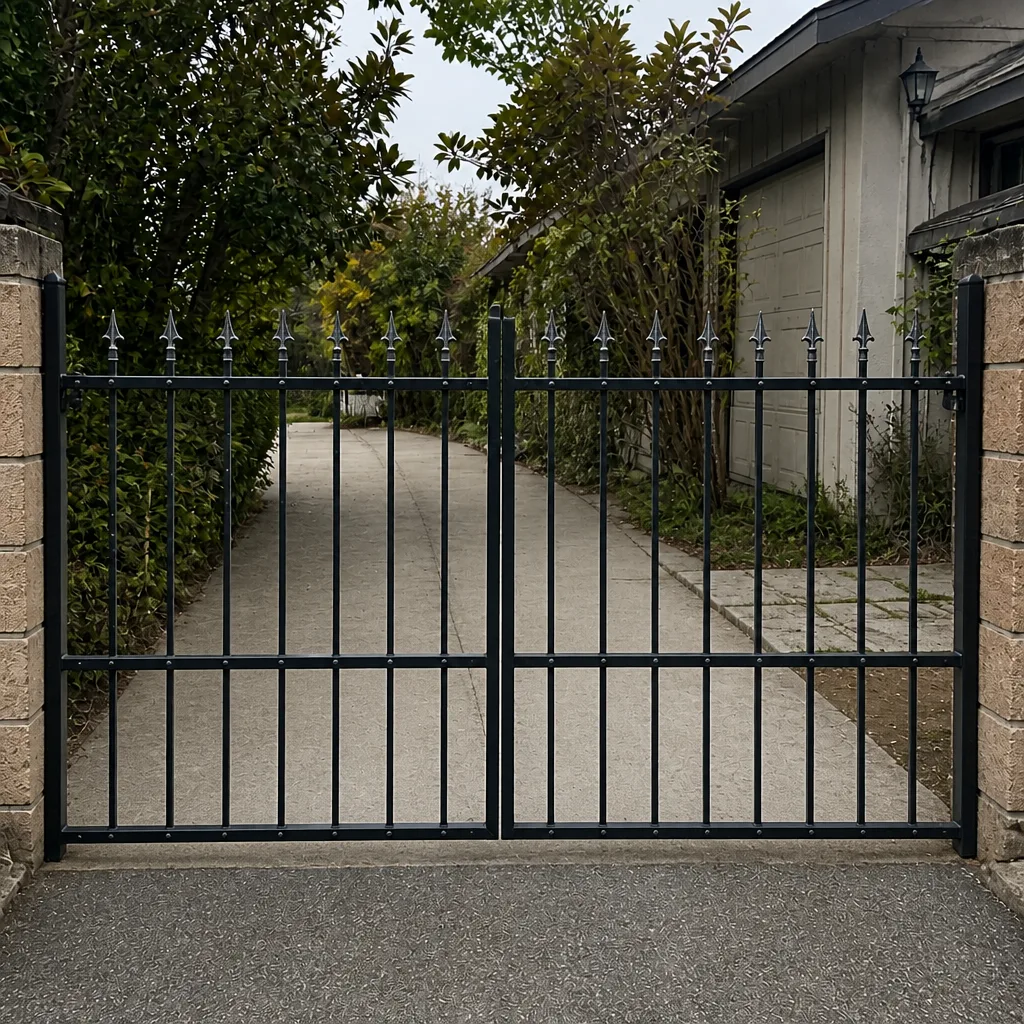
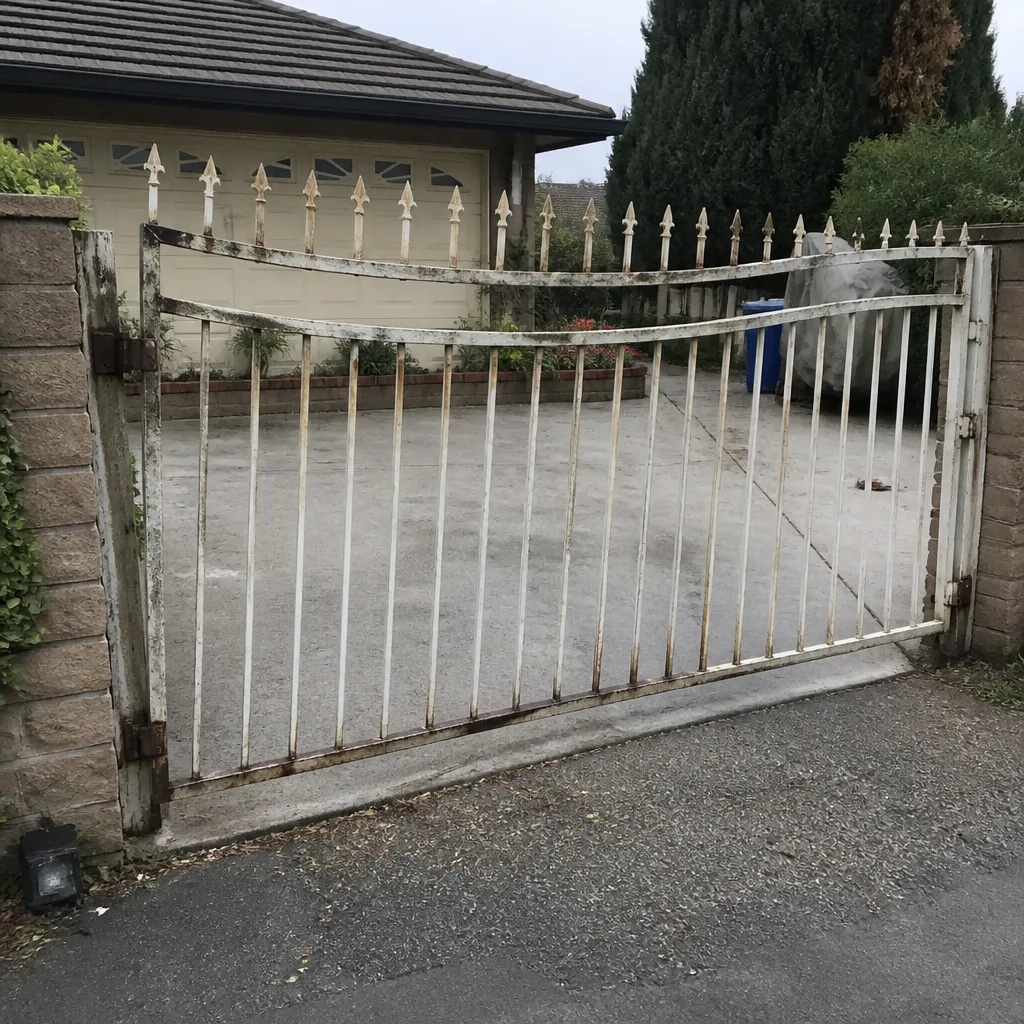
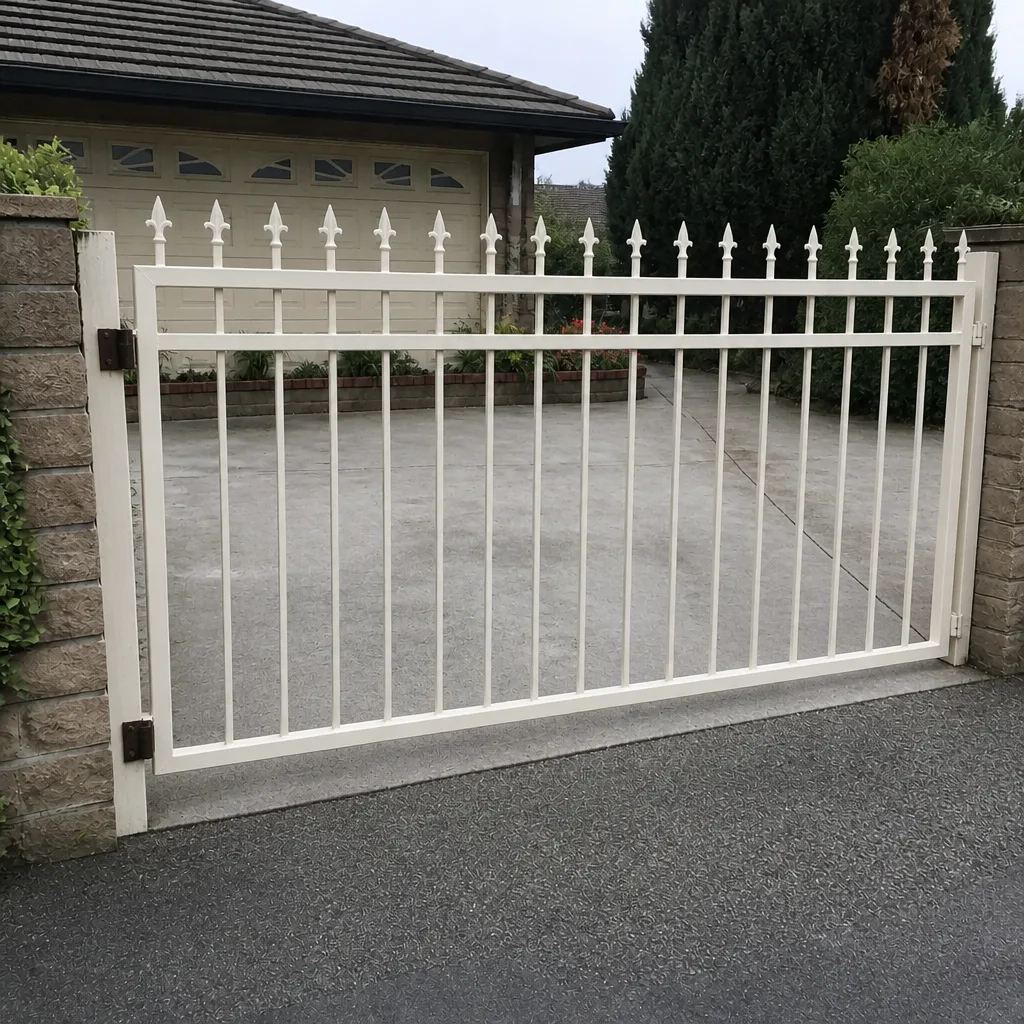
See the difference
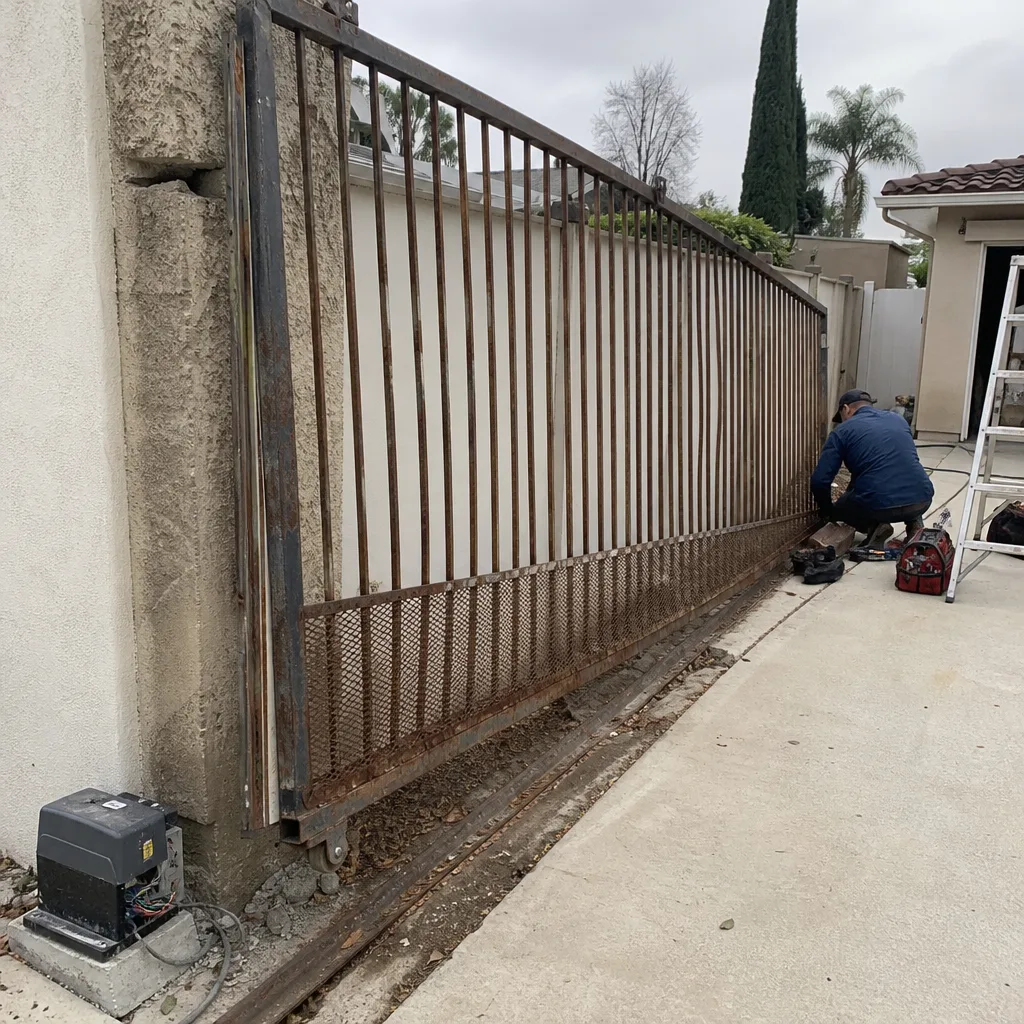 Before
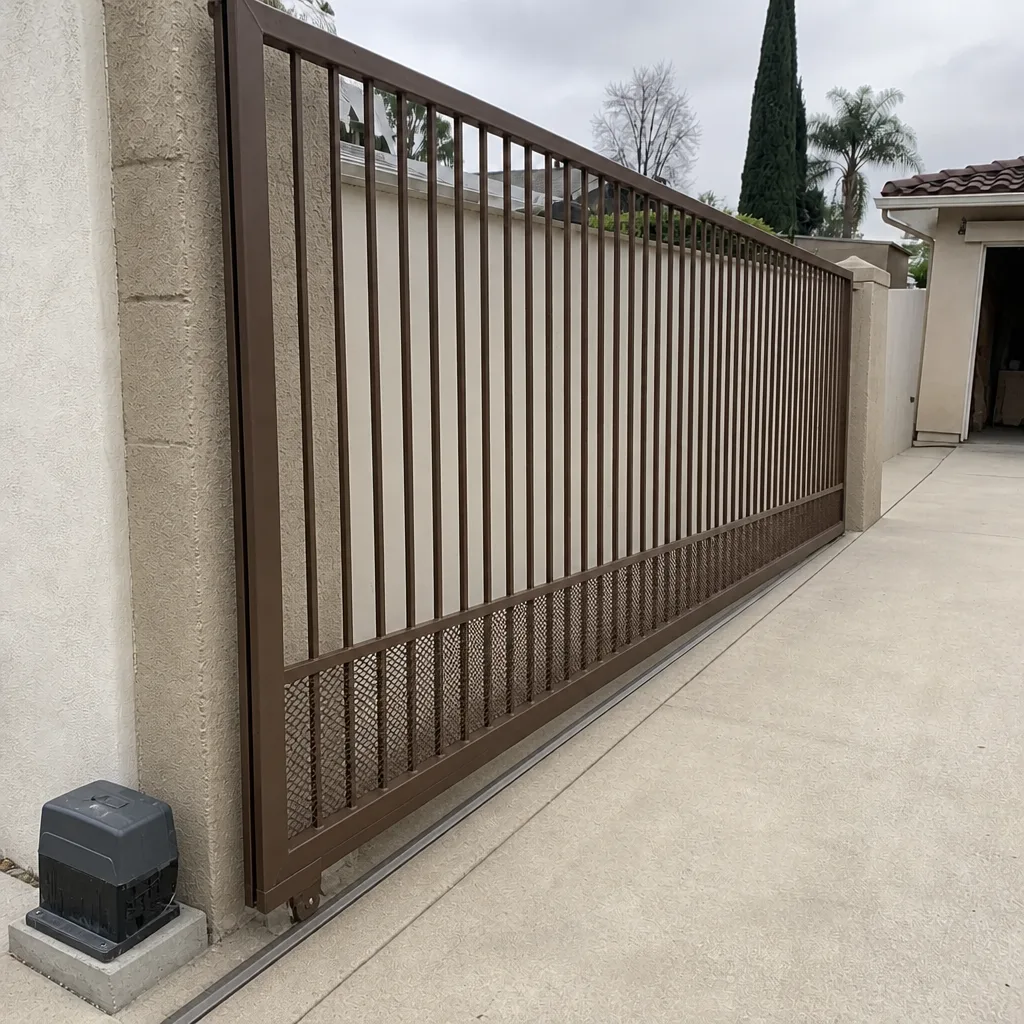 After
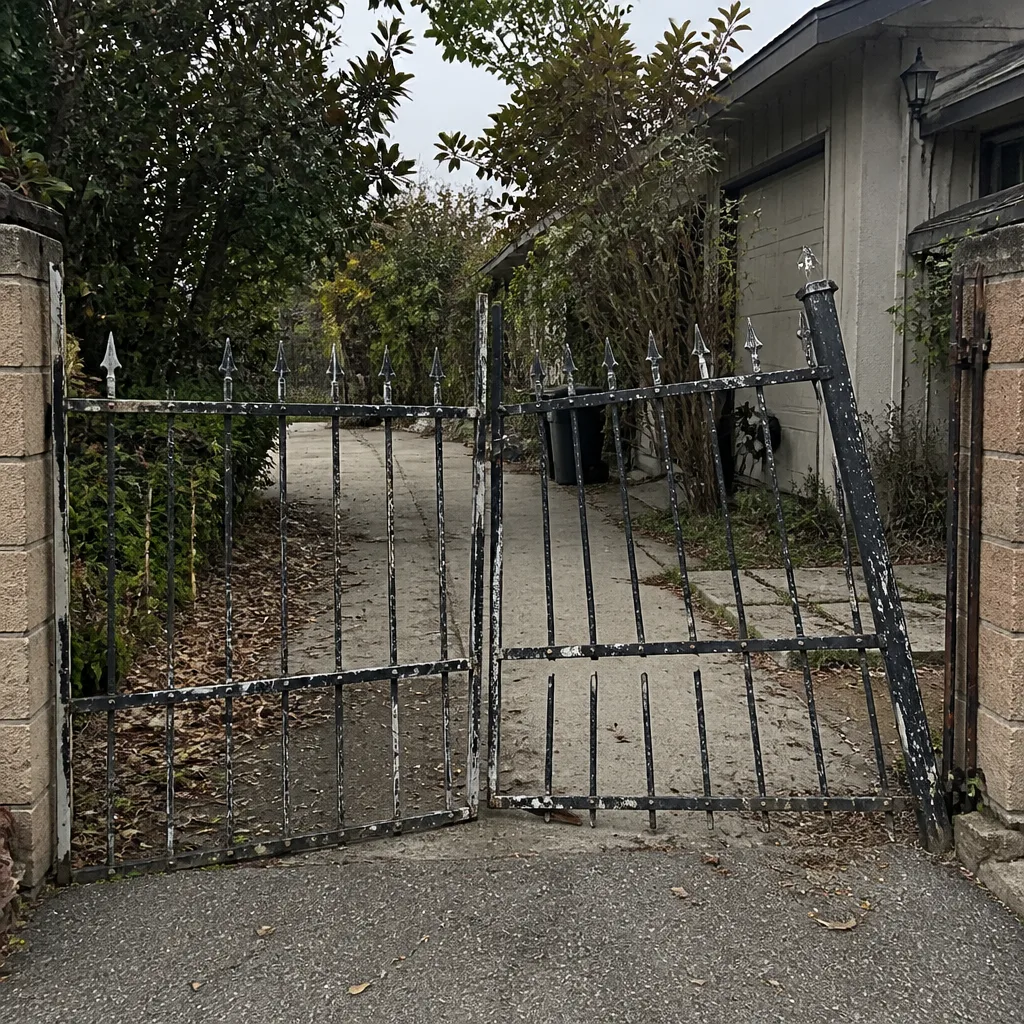 Before
 After
 Before
 After
When to Call a Professional
Call a gate specialist when the problem involves anything with stored mechanical energy, anything wired into your home’s electrical system, anything that requires you to support or remove the gate itself, or anything you’ve already tried to fix once and it’s still not right. That covers operator replacement, board diagnosis, spring and tension work, structural post repair, track realignment, underground wiring faults, and any gate at a multi-unit or commercial property.
If you’re in Yorba Linda and you’ve read this far trying to figure out which side of the line your problem falls on, call us and describe the symptom. Gate Repair Yorba Linda offers free estimates in Yorba Linda. Call (855) 382-4716. We answer 24/7. Fast dispatch from 7am to 7pm, Sunday through Friday. We’ll tell you honestly whether it’s a battery or a board, because we’d rather you spend ten minutes on a remote than pay for a service visit you don’t need.
Frequently Asked Questions
If the task requires no live electrical work, no contact with springs or tension systems, no removal or support of the gate panel, and no structural modification, it’s generally a safe DIY task. Replacing remote batteries, cleaning photo-eyes, lubricating hinges, and tightening visible hardware all qualify. If you’re opening the operator housing or touching wiring, the answer changes.
It doesn’t automatically void your policy, but it can affect a claim. If a gate you’ve self-serviced later injures someone, the insurer may argue that the UL 325 safety certification on the operator was voided by unapproved servicing, which can shift liability toward you. Keeping professional service records for electric gate work strengthens your position in any claims scenario.
Small fixes like sensor cleaning or hardware tightening typically run $85 to $175. Board replacements usually fall between $350 and $800 depending on brand. Full operator replacements range from about $900 to $2,200 installed. Every job is priced by a written estimate before work begins, so you’ll know the number before you approve anything.
If you’re in Yorba Linda and the gate is stuck open or closed, call (855) 382-4716. We answer 24/7, and we dispatch crews from 7am to 7pm, Sunday through Friday. If you call outside dispatch hours, you’re booked into the next opening. Same-day service is often available when you reach us in the morning.
The technician diagnoses the failure across your specific operator brand, explains what was found, and gives you a written estimate before any repair work starts. Once approved, they complete the repair, test the full system including safety sensors and obstruction detection, and clean up the work area. You should know exactly what was done and why before they leave.
We service the major residential and commercial gate operators across Yorba Linda, including FAAC, BFT, Linear, Viking, LiftMaster, Ghost Controls, DoorKing, Elite, and Mighty Mule. The brand matters for diagnosis, and we carry parts and knowledge for each one we work on. Call (855) 382-4716 with your operator’s brand and symptoms for an exact read on the situation.
The Bottom Line
The line between DIY and professional gate repair in Yorba Linda is not about how handy you are. It’s about what kind of energy and risk you’re dealing with. Battery changes, sensor cleaning, and hinge lubrication are reasonable homeowner tasks. Operator wiring, spring tension, structural support, and anything affecting the UL 325 entrapment system belong in professional hands, both for your physical safety and for your insurance standing. The money you save on a DIY board replacement disappears quickly if you misdiagnose the fault or void your system’s safety certification in the process. If you’re not sure which side of the line your gate problem falls on, describe the symptom to a gate specialist before you buy parts. Call (855) 382-4716. We answer 24/7. Fast dispatch from 7am to 7pm, Sunday through Friday.
Written by the team at Gate Repair Yorba Linda, serving Yorba Linda since 2011.